

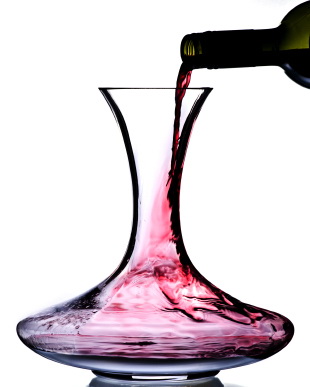
How do you decant wine?
Decanting wine simply means pouring it from its bottle into some other container: a carafe, a decanter, even a water jug. Here are 5 easy steps to decant wine:
- To decant a bottle with sediment, first leave it upright for about a day to settle the sediment at the bottom. When you’re ready, make sure the decanter and the mouth of the bottle are clean.
- For the actual pouring process, stand a flashlight on the table so that it shines upwards—it gives stronger light than the classic lit candle. Place the decanter beside it and pour the wine so that the light shines through the neck of the bottle. This will allow you to see when the sediment is approaching, so that you can stop pouring then.
- Discard the sediment left in the bottle.
- Leave younger wines in the decanter for about an hour or two, and older wines anywhere from fifteen minutes to a half an hour.
- Taste the wine periodically to see how it’s opening up. If you decide that the wine has peaked, but the guests aren’t due for a while, drape a cloth over the top of the decanter to slow aeration.
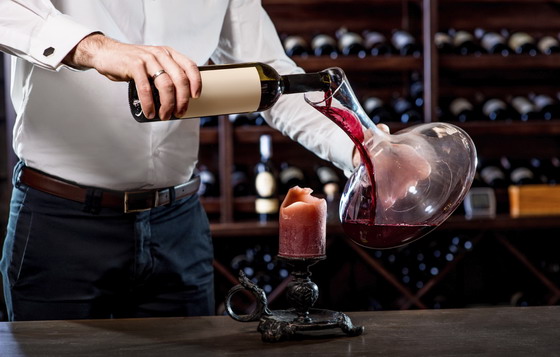
Why decant wine?
Wines are decanted to get rid of sediment, the organic matter that naturally precipitates from the wine as it matures. The wines that throw the most sediment are mature, full-bodied red wines and vintage port.
The second reason to decant is to let the wine breathe so that it helps to warm up a wine that’s too cold, soften any harsh tannins and open up its aromatics.
This is especially true of rough-and-not-ready reds, particularly young, full-bodied ones: cabernet sauvignon, zinfandel, brunello, barolo, bordeaux, rioja, shiraz, syrah and Northern Rhone wines.
Should some wines not be decanted?
Even decanting hardliners admit that some wines just aren’t made for airing out. Delicate red wines, such as pinot noir and gamay, aren’t usually decanted because their subtle aromas can quickly dissipate.
The same goes for zesty whites, such as rieslings and sauvignon blanc: they can lose their crisp, refreshing edge.
Others are borderline: full-bodied whites, such as oaky chardonnays and some sweet wines, may benefit from decanting, depending on the style you like.
Which types of decanters are best?
You need a decanter large enough to hold the contents of a standard bottle, with some room at the top to allow the wine to breathe.
Decanters that maximize the wine-to-air surface ratio are best for young wines, while those with narrow necks that reduce air exposure are better for older wines that just need their sediment removed.
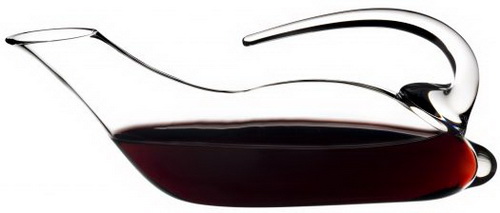
My personal favourite decanter is the “duck” style made by Riedel and others. It allows for lots of air exposure, but is very easy to pour and distributes the weight of the wine evenly. You also don’t get that awkward moment near the end of the wine when you have to tip a decanter like the one at the top of this post almost upside down to get the last drops of wine.





Thank You for this most informative site!, The info and advice given is far better than comparable sites and easily understood.
Sincerely,
Kathleen
wine lover and tasting representative