






Introduction
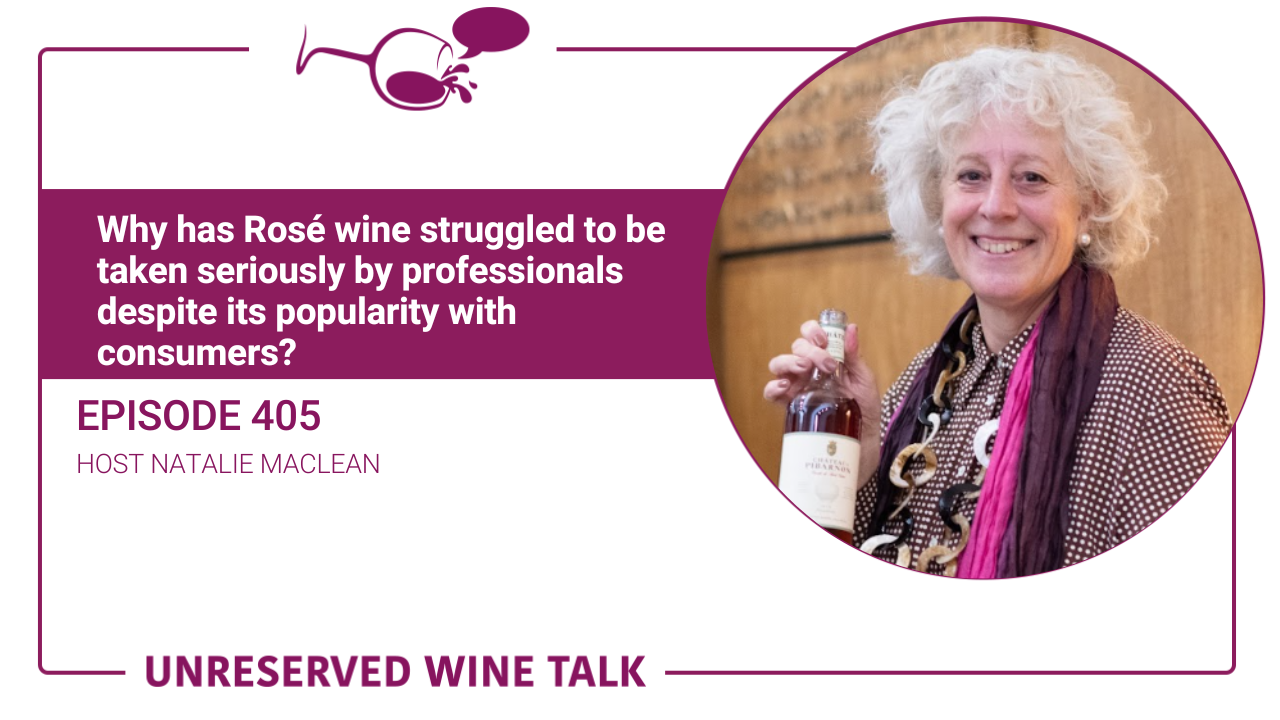
How is Provence far more diverse as a wine region than just Rosé? Why has Rosé struggled to be taken seriously by wine professionals despite its enormous popularity with consumers? Does Provence make the best Rosé in the world or simply the best Rosé in its style?
In this episode of the Unreserved Wine Talk podcast, I’m chatting with Liz Gabay and Ben Bernheim.
You can find the wines we discussed here.
Giveaway
Two of you are going to win a copy of Liz Gabay and Ben Bernheim’s terrific book, The Wines of Provence.
How to Win
To qualify, all you have to do is email me at [email protected] and let me know that you’ve posted a review of the podcast.
It takes less than 30 seconds: On your phone, scroll to the bottom here, where the reviews are, and click on “Tap to Rate.”
After that, scroll down a tiny bit more and click on “Write a Review.” That’s it!
I’ll choose two people randomly from those who contact me.
Good luck!
Join me on Instagram, Facebook and YouTube Live Video
Join the live-stream video of this conversation on Wednesday at 7 pm eastern on Instagram Live Video, Facebook Live Video or YouTube Live Video.
I’ll be jumping into the comments as we watch it together so that I can answer your questions in real-time.
I want to hear from you! What’s your opinion of what we’re discussing? What takeaways or tips do you love most from this chat? What questions do you have that we didn’t answer?
Want to know when we go live?
Add this to your calendar:

Highlights
- What surprised Liz and Ben most when they started digging deeper into the wines of Provence?
- How do Provence’s mountains, valleys, rainfall, and winds create dramatically different wine regions within a relatively small area?
- How have the wines of Provence changed since Liz first started visiting vineyards there 40 years ago?
- Why did Provence wineries once use unusual bottle shapes to distinguish their wines?
- What was the hardest part of becoming a Master of Wine for Liz?
- Why has Rosé historically struggled to be taken seriously by wine professionals despite its popularity with consumers?
- How did growing up around wine and competitive blind tasting shape Ben’s approach to writing about it?
- What happens when a mother and son with very different writing styles collaborate on a wine book?
- Why do Liz and Ben disagree over whether Provence should focus so heavily on Rosé?
- Could some of Provence’s best wines actually be reds rather than Rosés?
- Why does Liz believe Provence-style Rosé is not necessarily the best in the world?
Key Takeaways
- Why has Rosé struggled to be taken seriously by wine professionals despite its enormous popularity with consumers?
- L: Rosé has really only been in the Master of Wine exam for the past three years.
- N: Was that a bit of a snooty kind of approach? Like it wasn’t like a serious wine?
- L: It still is. I think it’s probably one of the biggest hurdles to the category. And you can say, you know, Rosé is one of the most successful commercial categories currently in the wine market. People like it. In a market where sales are going down, Rosé is not. So, as wine professionals, should we say, well, we only drink top, top wine? Or should we actually understand and know what the consumer wants to taste?
- How is Provence far more diverse as a wine region than the idea of a “Provence Rosé” suggests?
- B: You asked, how does it compare to Bordeaux? It’s so big that the Northwest and Le Beau is Mistral. It’s relatively low altitude. It’s just wind and limestone and nothing else. And then you get to other bits and it’s actually… it’s almost, I wouldn’t call it tropical, but bits of fruit juices, palm trees and any sort of pretty flowers and there’s no wind. It’s just pretty sea breezes. And it’s hot all year long and it’s lovely and it’s a large enough region. There’s there’s something for everyone. But that also means that the wines have somewhat less in common than two Bordeaux wines might have
- L: Well, that’s something we were very, very keen on this book on Provence and in Rosés of Southern France to discuss, because everyone talks about Rosé Provence style. I mean, when we were doing the book on Rosés of Southern France, we could do a blind tasting and we could say that Rosé comes from this region or that region. We were able to pick up those very subtle differences.
- Does Provence make the best Rosé in the world or simply the best Rosé in its style?
- L: I think it’s great that we specialize because if you specialize in a subject or a region, you know it inside out. But the important thing is always to keep an open mind and a context. So we go to London quite a bit just because of the sheer range of tastings. Like this last month, we’ve been to a Slovakian tasting, a Rueda tasting, a Portuguese tasting, the central European tasting, Italian tastings and a Greek tasting. And I think it is absolutely vital. In fact, we have spoken to professionals who only deal with their region. We could say Provence makes the best Rosé in the world. I disagree, I think Provence makes fabulous Rosé. We very rarely get any faulty wine, but they make the best Rosé in that style, if that makes sense. But if you’re looking at a Rioja Rosé, which is not made to be like Provence, that is fantastic, or Tuscan Rosé or a Greek Rosé, it doesn’t make as good a Provence-style Rosé as Provence, but it does make excellent Rosé in another style. Keeping that sort of point of reference always going, is really important.
About Elizabeth Gabay MW & Ben Bernheim
Elizabeth Gabay MW entered the wine trade in 1986, founding Elizabeth Gabay & Partners. She became a Master of Wine in 1998. She has lived in south-eastern France since 2002, and is currently based in the Provence-Alpes-Côte d’Azur region. Since 2020 she has been working with her son Ben Bernheim. They write for numerous magazines with a global readership, largely, but not only, about rosé and are regular speakers at wine fairs and competitions. Elizabeth is the author of Rosé: Understanding The Pink Wine Revolution in the Classic Wine Library series, and Rosés of Southern France, which she co-authored with Ben Bernheim. Gabay and Bernheim make their own wine in Slovakia, in partnership with Vladimir Magula and have consulted with other producers on Rosé, including Kylie Minogue. Together they organise a rosé writing competition and trade events, including their Fine Rosé Day.
Resources
- Connect with Liz Gabay & Ben Bernheim
- Unreserved Wine Talk | Episode 80: What’s the Rosé Lifestyle? Wine Writer Jill Barth on Why You’d Enjoy It
- Natalie’s Appearance on CTV’s CP24 Breakfast Show | What are the Best Drinks for Summer Sipping at the Cottage?
- My Books:
- Wine Witch on Fire: Rising from the Ashes of Divorce,Defamation, and Drinking Too Much
- Audiobook:
- Audible/Amazon in the following countries: Canada, US, UK, Australia (includes New Zealand), France (includes Belgium and Switzerland), Germany (includes Austria), Japan, and Brazil.
- Kobo (includes Chapters/Indigo), AudioBooks, Spotify, Google Play, Libro.fm, and other retailers here.
- Wine Witch on Fire Free Companion Guide for Book Clubs
- Audiobook:
- Unquenchable: A Tipsy Quest for the World’s Best Bargain Wines
- Red, White, and Drunk All Over: A Wine-Soaked Journey from Grape to Glass
- Wine Witch on Fire: Rising from the Ashes of Divorce,Defamation, and Drinking Too Much
- My new class, The 5 Wine & Food Pairing Mistakes That Can Ruin Your Dinner And How To Fix Them Forever
Tag Me on Social
Tag me on social media if you enjoyed the episode:
- @nataliemaclean and @natdecants on Facebook
- @nataliemaclean on Twitter
- @nataliemacleanwine on Instagram
- @nataliemaclean on LinkedIn
- Email Me at [email protected]
Thirsty for more?
- Sign up for my free online wine video class where I’ll walk you through The 5 Wine & Food Pairing Mistakes That Can Ruin Your Dinner (and how to fix them forever!)
- You’ll find my books here, including Unquenchable: A Tipsy Quest for the World’s Best Bargain Wines and Red, White and Drunk All Over: A Wine-Soaked Journey from Grape to Glass.
- The new audio edition of Red, White and Drunk All Over: A Wine-Soaked Journey from Grape to Glass is now available on Amazon.ca, Amazon.com and other country-specific Amazon sites; iTunes.ca, iTunes.com and other country-specific iTunes sites; Audible.ca and Audible.com.
Transcript