






Introduction
What really happens when the world’s most expensive wines are tasted blind, without their labels or reputations? Why is the Len Evans Tutorial considered such a valuable experience in the wine world? How did Grenache go from a filler grape to one that producers take seriously?
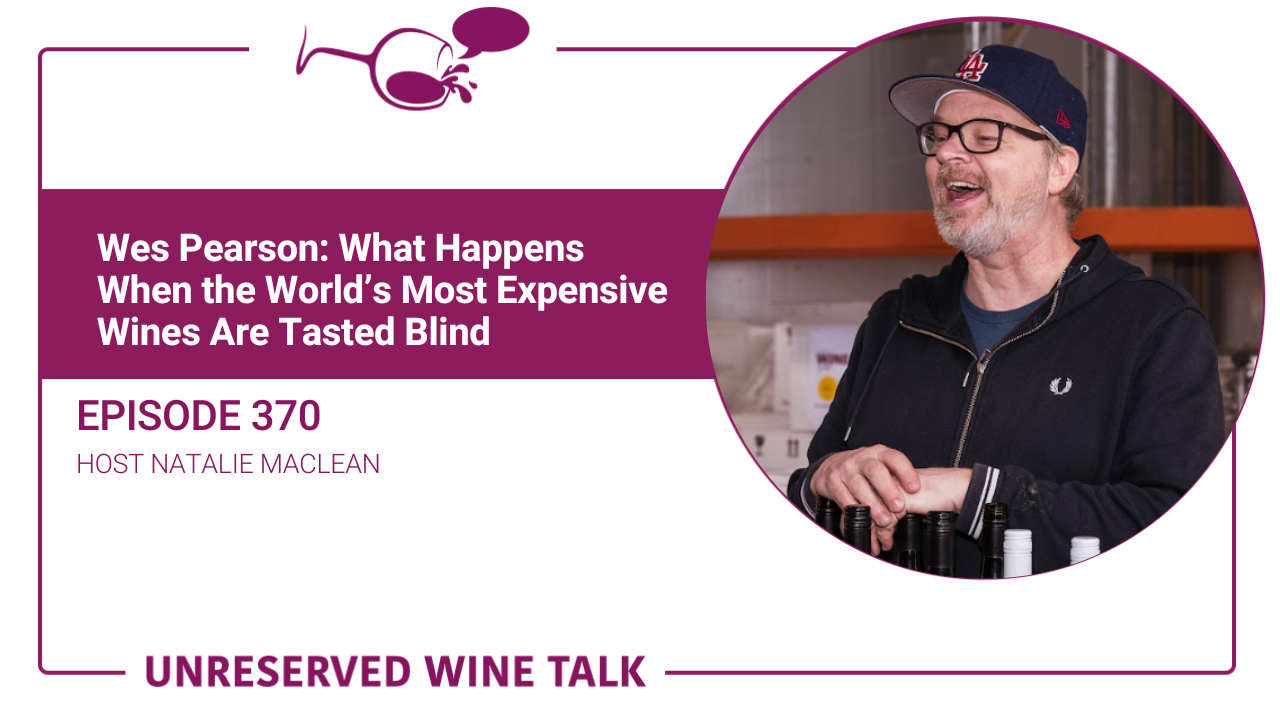
In this episode of the Unreserved Wine Talk podcast, I’m chatting with Dr Wes Pearson, a senior research scientist at the Australian Wine Research Institute in Adelaide.
You can find the wines we discussed here.
Join me on Instagram, Facebook and YouTube Live Video
Join the live-stream video of this conversation on Wednesday at 7 pm eastern on Instagram Live Video, Facebook Live Video or YouTube Live Video.
I’ll be jumping into the comments as we watch it together so that I can answer your questions in real-time.
I want to hear from you! What’s your opinion of what we’re discussing? What takeaways or tips do you love most from this chat? What questions do you have that we didn’t answer?
Want to know when we go live?
Add this to your calendar:

Highlights
- How did a curiosity for astrophysics shape Wes’s mindset as a wine researcher and sensory scientist?
- Why does Wes believe that the more you learn about wine, the more you realize how little you know?
- Why does Wes see scientific research and hands-on winemaking as complementary approaches?
- What role did the Len Evans Tutorial play in shaping his palate and wine judging standards?
- What is it like to taste hundreds of benchmark wines blind, including Domaine de la Romanée Conti?
- How did Wes’s internship at Château Léoville Las Cases reveal the depth of precision and investment behind elite Bordeaux wines?
- What drew Wes to McLaren Vale and how did the region reshape his priorities as a winemaker?
- Why was Grenache long treated as a filler grape in McLaren Vale?
- How does sensory science work to eliminate bias?
- Why are trained professionals often excluded from traditional sensory panels?
- What kinds of unconscious bias can labels, color, and context introduce when tasting wine?
- How does pivot profiling allow winemakers and sommeliers to use their technical language productively?
- What’s behind the rapid improvement in no and low alcohol wines?
Key Takeaways
- What really happens when the world’s most expensive wines are tasted blind, without their labels or reputations?
- The current vintage of the Romanée-Conti Grand Cru, or that vineyard, is about $15,000 on release. They’re crazy, right? They’re not wines that are generally bought and drunk. They’re bought as investments. And they’re kind of these holy grail wines that you would never get a chance to see otherwise. And not only is it great to taste them, but you taste them blind. And so that is great, because sometimes the emperor has no clothes, right? Sometimes these amazing wines that have the crazy stories and pedigree, you taste them blind, and they’re not quite all they’re cracked up to be. Or they are, which is actually a better story. When you taste through some of these… I remember tasting through a lineup of Bordeaux, all blind. Some of them were like, oh, good. And then one of them was just like, that wine’s unbelievable. Wow. What is that? And it was Pétrus, a $5,000 bottle of wine. I’m so glad that one actually is really good, that’s amazing.
- Why is the Len Evans Tutorial considered such a valuable experience in the wine world?
- The Len Evans Tutorial is a tasting over a period of a week that is put on by the Australian wine industry. Twelve people are selected. You have to write an application letter. There’s hundreds of applications every year, and it is a one-week immersive tasting session with the world’s greatest wines. Not just Australian wines. You have a bracket of Pinot Noir, and within that, you’ve got DRC and you’ve also got all of the great Australian examples as well. And so what it is, it’s a benchmarking exercise. It’s meant to set your benchmarks for what is the world standard and what is the Australian standard. And now I’m going to use that knowledge to apply it to the wines that I’m going to judge when I go forth after this into the wine show system. It’s meant to cap off your wine show judging experience.
- How did Grenache go from a filler grape to one that producers take seriously?
- Historically, Grenache was the filler in blends. Grenache loves the heat so you can leave it out in the vineyard. It’s going to be fine. The Shiraz has to come in first. We’ll get the Grenache later when we have some space in the winery. And it was used to fill up the blends. It had lots of flavor. It always had lots of alcohol as well. So it wasn’t the top dog. It kind of was the backfill. I think that probably throughout the 90s and the 2000s, that was kind of the way things rolled. And then around 2010, a few producers started saying, we’ve got some pretty good resource here. Maybe we should think about investing a bit more time and effort into what we’ve got with Grenache.
About Dr. Wes Pearson
Dr Wes Pearson is a senior research scientist and sensory group manager at the Australian Wine Research Institute in Adelaide. He holds a BSc in Wine Biochemistry from the University of British Columbia, a diploma in Applied Sensory and Consumer Science from the University of California Davis and a PhD from Charles Sturt University. He has worked in the sensory group at the AWRI since 2010 and has completed hundreds of sensory studies and authored over 25 research papers in that time. He is an alumnus of the Len Evans Tutorial and of Wine Australia’s Future Leaders program and sits on the board of directors for the McLaren Vale Grape Wine and Tourism Association. He has judged at multiple capital city and regional wine shows and has been an educator/judge for the AWRI’s Advanced Wine Assessment Course for more than a decade. He is also an accomplished winemaker, having made wine in Canada and France, and currently makes wine under his Juxtaposed label in McLaren Vale, South Australia.
Resources
- Connect with Dr. Wes Pearson
- Website: Juxtaposed.com.au
- New Year’s Drinks:
- St. Regis Brut Alcohol-Free Sparkling – France
- Nyarai Folklore Sparkling – Niagara, Ontario
- Small Gully Wines The Formula Robert’s Shiraz – Barossa Valley, Australia
- Rossi D’Asiago Limoncello – Veneto, Italy
- Unreserved Wine Talk | Episode 363: Why Does the Term “Mocktail” for Zero Proof Non-Alcoholic Drinks Offend Many Bartenders?
- My Books:
- Wine Witch on Fire: Rising from the Ashes of Divorce,Defamation, and Drinking Too Much
- Audiobook:
- Audible/Amazon in the following countries: Canada, US, UK, Australia (includes New Zealand), France (includes Belgium and Switzerland), Germany (includes Austria), Japan, and Brazil.
- Kobo (includes Chapters/Indigo), AudioBooks, Spotify, Google Play, Libro.fm, and other retailers here.
- Wine Witch on Fire Free Companion Guide for Book Clubs
- Audiobook:
- Unquenchable: A Tipsy Quest for the World’s Best Bargain Wines
- Red, White, and Drunk All Over: A Wine-Soaked Journey from Grape to Glass
- Wine Witch on Fire: Rising from the Ashes of Divorce,Defamation, and Drinking Too Much
- My new class, The 5 Wine & Food Pairing Mistakes That Can Ruin Your Dinner And How To Fix Them Forever
Tag Me on Social
Tag me on social media if you enjoyed the episode:
- @nataliemaclean and @natdecants on Facebook
- @nataliemaclean on Twitter
- @nataliemacleanwine on Instagram
- @nataliemaclean on LinkedIn
- Email Me at [email protected]
Thirsty for more?
- Sign up for my free online wine video class where I’ll walk you through The 5 Wine & Food Pairing Mistakes That Can Ruin Your Dinner (and how to fix them forever!)
- You’ll find my books here, including Unquenchable: A Tipsy Quest for the World’s Best Bargain Wines and Red, White and Drunk All Over: A Wine-Soaked Journey from Grape to Glass.
- The new audio edition of Red, White and Drunk All Over: A Wine-Soaked Journey from Grape to Glass is now available on Amazon.ca, Amazon.com and other country-specific Amazon sites; iTunes.ca, iTunes.com and other country-specific iTunes sites; Audible.ca and Audible.com.
Transcript
Natalie MacLean 00:00:00 What really happens when the world’s most expensive wines are tasted blind, without their labels or reputations? Why is the Len Evans tutorial considered an incredibly valuable tasting experience, perhaps the most valuable in the wine world? And how did Grenache go from a filler grape in blends to one that producers take seriously? In today’s episode, you’ll hear the stories and tips that answer those questions in our chat with Doctor Wes Pearson, a senior research scientist at the Australian Wine Research Institute in Adelaide. By the end of our conversation, you’ll also discover how a curiosity for astrophysics shaped Wes’s mindset as a wine researcher and sensory scientist. Why Wes sees scientific research and hands on winemaking as complementary approaches. What it’s like to taste hundreds of benchmark wines blind, including. Domaine de la Romani. Kante. How Wes’s internship at Chateau Leveled Le CAS revealed the depth of precision and investment behind elite Bordeaux wines. What drew west to the McLaren Vale in Australia, and how that region has reshaped his priorities as a winemaker. How sensory science works to eliminate bias.
Natalie MacLean 00:01:24 Why trained wine professionals are often excluded from traditional sensory panels. The kinds of unconscious bias that labels colour and context can introduce when tasting wine. How pivot profiling allows winemakers and sommeliers to use their technical language productively. And what’s driving the rapid improvement in low and no alcohol wines?
Natalie MacLean 00:01:55 Do you have a thirst to learn about wine. Do you love stories about wonderfully obsessive people, hauntingly beautiful places, and amusingly awkward social situations? Oh, that’s the blend here on the Unreserved Wine Talk podcast. I’m your host, Natalie MacLean, and each week I share with you unfiltered conversations with celebrities in the wine world, as well as confessions from my own tipsy journey as I write my third book on this subject. I’m so glad you’re here. Now pass me that bottle, please, and let’s get started.
Natalie MacLean 00:02:37 Welcome to episode 370. Happy New Year’s Eve if you’re listening to this podcast on the day it’s published. What to drink? Thinking, thinking. Maybe I should ask. ChatGPT. Well, sparkling wine, of course.
Natalie MacLean 00:02:54 Whether that’s champagne, Cremona, Prosecco or cava, you could do a sparkling ladder tasting, moving from Prosecco to Cremona to Champagne to see where the crowd lands by midnight. Serve salty snacks, chips, popcorn, fries, sparkling wine. Love salt even more than it loves oysters. Roughly 360 million glasses of champagne are consumed globally between Christmas and New Years, according to the Comité de champagne. That popping sound comes from the gas escaping at nearly 40km an hour. January 1st is New Year’s Day, of course, and it is also National Bloody Mary Day. Challenge your friends to a garnish war where the drink is basically a meal. Think sliders or pickled eggs or on a skewer. Of course, January 1st may also be the time when you want to move to low and no alcohol cocktails, sparkling wine with bitters, or regret or bitter regret. they all pair well with Advil. You could host a reset brunch to build your own spritzes using tonic water, citrus, and herbs. Make a signature drink with flavor, not force.
Natalie MacLean 00:04:04 Think citrus, ginger, and rosemary. Surf leftovers paired with drinks instead of pretending they’re just fridge clutter. January 1st is one of the biggest single days for alcohol free beverage sales in Canada, according to retail tracking studies. January 2nd is National Cream Puff Day. You could pair that with sparkling wine. Moscato d’Asti cream sherry fill cream puffs with lightly sweetened mascarpone and serve it with something bubbly or low alcohol. Turn it into a tasting flight. Dust with icing sugar and call it a dessert theater now. Shoo or show pastry. It’s c h o x dates back to the 16th century France, and its neutral flavor makes it one of the most wine friendly desserts around. So I had to look this up. So. Shoo, shoo is I think it’s shoo, a light French pastry dough made from water or milk, butter, flour and eggs. There is no baking powder or yeast. It puffs up because the steam expands inside the dough in the oven. So you cook the dough on the stove first, then you bake it in the oven.
Natalie MacLean 00:05:15 It forms a crisp shell with a hollow center, perfect for fillings, so it’s used for cream puffs, declares profiteroles and Goya, those savory, cheese filled versions that love sparkling wine. So the pastry itself isn’t sweet. That neutrality lets the filling and the wine do the talking, whether it is pastry cream, whipped cream, ice cream, or cheese. Apparently it was invented by chefs in the royal kitchens back in the 16th century. France. And Shu means cabbage because the little baked puffs resemble little cabbages, but they’re much more tasty. January 3rd is National Chocolate covered Cherry Day. So you could try Port Daniel’s Late Harvest Reds cherry forward cocktails, or try a cherry infused Manhattan or a cherry accented vermouth spritz. You didn’t last long with those non-alcoholic wines, did you? Blind taste fresh cherries versus chocolate covered cherries to see how the sweetness changes your perception. Just a trivia bit. Chocolate covered cherry flavors naturally echo the red wine tasting notes like kirsch cocoa and black forest cake. January 4th is National Spaghetti Day.
Natalie MacLean 00:06:27 Drink Italian reds. Lambrusco. Sangiovese. Brunello. Montepulciano. I think I mangled three grapes into one in that last one. You could serve three sauces. One passed a shape and let the wine do the heavy lifting. Or try a chilled Lambrusco with tomato sauce for a surprising reset after the holidays. Trivia note spaghetti became wildly popular outside Italy only in the 20th century, largely due to immigration and industrial pasta production. January 5th is National Whipped Cream Day. Pair it with ice wine, late harvest whites, or coffee liqueur cocktails. Fat and sweetness, by the way, soften acidity and tannin, which is why whipped cream can make very sweet wines taste more balanced. January 6th is Epiphany or Three Kings Day. You could try some Spanish sparkling wine or fortified wines. Epiphany marks the official end of the Christmas season in many countries and in parts of Europe. It’s more important than December 25th. All right, so what’s new in the world of drinks this week? In Ontario, the biggest consumer shift is grab and go.
Natalie MacLean 00:07:36 Beer sales were up 22%. RTD are ready to drink coolers 21%. Big pack behavior is downright Costco coated with large format beer packs up 42% and 30 packs, leading that charge. Holiday marketing peaked with the cozy Core arms race phase. Retailers and brands leaning hard into fireside serves gift table formats and anything that reads as a stocking stuffer. You can sip, sweater and sip. Swap. A winery led social trend, saw people swapping mystery bottles wrapped inside ugly holiday sweaters rather than traditional gift bags. And in marketing moves, Southern Comfort recently surprised fans with a live concert in a moving train in what’s called commuter marketing. Social media has been buzzing about the anti wishlist trend where influencers post bottles they are not sharing, mostly like rare vintages of 1945 Roman candy. Meanwhile, KFC’s campaign pairing fried chicken with caviar and champagne has gone viral. Gen Z bar phobia. A recent consumer study found that Gen Z drinkers find ordering at high end bars intimidating, leading to a trend of bars using emoji only menus. Man, I think I’d be stumped with that diamond and fir vodka.
Natalie MacLean 00:09:00 The billionaire vodka brand is back in the news for its bottle, encrusted with 3000 diamonds and wrapped in cruelty free faux fur. How enlightened. TikToks viral spicy savvy bee that’s Sauvignon blanc with frozen jalapeno slice or slices. Saw a 30.7% year over year growth on social media to elaborate sangria variations. Looking at broader marketing trends from Southern Glazer’s, we’re seeing the pushing of experiential marketing with culinary artistry techniques like fat washes and rotary evaporator distillates becoming mainstream bar tools rather than geeky bartender secrets. And finally, some things to make you smile. A Montreal group dressed as Santas and masked elves pulled off a Robin Hood style grocery theft that reads like a holiday movie with sharp elbows. In Bordeaux, 12 defendants are appearing in court over gang D Grand Cru cellar raids that stole more than 4000 bottles worth over €2.5 million. I guess that’s 3.5 million Canadian bucks from prestigious Bordeaux and Burgundy estates between 2019 and 2020. In Portugal, authorities shut down a covert bottling operation in Vila Real that was falsely labeling wine as Douro Doc Reserve, proving that wine fraud is alive and well globally and in Yorkshire.
Natalie MacLean 00:10:32 A police dog named Rocco uncovered $110,000 or pounds worth, so $150,000 worth of stolen mulled wine. After pulling over a driver who then tried to flee on foot before Rocco tracked him down. Good dog. Good sit. The suspect was found with class A and class B drugs and released on bail, but presumably not in time for Christmas. Mulled wine. If you have some wine, news or quirky stories you think I should share on the podcast. Email me at Natalie at Natalie MacLean. This week on CTV’s Your Morning, we chat about New Year’s drinks. Whether you’re hosting an intimate gathering or a grand celebration, from elegant bubbles to bold reds and even some sophisticated non-alcoholic options. We’re exploring a lineup that will elevate any midnight countdown. Personally, I love celebrating the one night of the year that has good wine, great company, and fresh goals, even if those goals are remarkably similar to those we had last year. Luckily, we probably don’t remember them.
Let’s start with a sparkling wine that delivers flavour without the alcohol.
Natalie MacLean 00:11:46 If you’re drinking this, you actually will remember your resolutions the next morning. The Saint Regis Brut, alcohol free sparkling from France, just won double gold at the San Francisco International Wine Competition, one of the most prestigious in the world. This sparkling opens with lively notes of green apple, lemon zest and a hint of freshly cut pear. Carried on a fine, energetic mousse that gives it a celebratory feel. The palate is crisp and refreshing, with just enough texture to keep it interesting, and a clean, dry leaning finish that makes it easy to sip on its own or pair with food. You can get this wine online through retailers like Amazon and others that will deliver it right to your doorstep. And here’s the magic with this sparkling: imagine golden butter toss popcorn still warm from the stove, each kernel glistening with richness and those bright bubbles just cut through all that buttery decadence like sunshine through clouds. The citrus notes lift everything beautifully.
Now let’s move on to a bit of sparkle and alcohol from Ontario. Supporting local winemakers is always important, but this bottle showcases just how spectacular Ontario sparkling can be.
Natalie MacLean 00:12:57 Did you know that Niagara’s cool climate is ideal for producing elegant, sparkling wines? We’re on the same latitude as Champagne, France. The Nyarai Folklore, sparkling from Niagara, is so vibrant it feels lifted and luminous from the first sip, with fine bubbles carrying notes of citrus blossom, orchard fruit and a gentle mineral thread that keeps everything crisp and focused. Established in 2008, Nyarai Cellars is one of the few Black owned wineries in Canada. Winemaker Steve Byfield focuses on small, light wines that showcase the rich diversity of Niagara wine styles. This one, like all the rest, is available in the LCBO or directly from the wineries themselves. This sparkling wine is incredibly food friendly. Picture a chèvre and herb tart, its golden pastry shell cradling creamy goat cheese folded with fresh thyme and chives, still warm from the oven, with the cheese just beginning to soften. The bright acidity cuts through that creamy richness like a knife through butter.
And for anyone who loves a big, bold red, I’ve got something spectacular from Australia’s Barossa Valley.
Natalie MacLean 00:14:08 It’s home to some of the oldest Shiraz vines in the world, dating back to the 1840s, and these ancient vines produce incredibly concentrated, complex wines. The Formula Robert Shiraz from Small Gully Wines is boutique, hands on winemaking at its finest. A multi-generational effort led by father and son team Steven and Joe Black, who focus on small batch ferments and gentle handling to preserve the depth and character of the wine. This wine demands bold food. Start with braised beef short ribs slowly cooked until the meat practically falls off the bone. Glazed in their own rich glossy sauce with hints of red wine and herbs. The wine’s dark fruit wraps beautifully around all that richness, like a velvet blanket. And now something to end the evening on a sweet note.
Let’s talk about the grand finale in this festive looking faceted glass bottle. Traditional Italian limoncello is made by steeping lemon zest in pure alcohol for weeks, extracting all those gorgeous essential oils before adding some sweetness for balance. Serve it well chilled. It’s meant to be a digestive to help settle your stomach after a big meal.
Natalie MacLean 00:15:22 The Rossi D’Asiago Limoncello opens with a rush of sunlit lemon peel, a touch of pithy bitterness and a cool, silky sweetness that glides across the palate with finesse. Its texture is plush yet refreshing, finishing with a clean snap of citrus that keeps it lively rather than cloying. Serve it chilled on its own, or let the lovely citrus aromas unfold as it warms slightly. I actually serve this in limoncello glasses. You can get specialty glassware, and they are so darn cute. Pour it alongside lemon ricotta cheesecake. Its creamy, cloud-like texture studded with tiny curds of ricotta and infused with lemon zest, all resting on a buttery graham cracker crust. The citrus notes in both the cake and the limoncello echo each other beautifully, creating layers of bright, sunny flavour.
So here’s to the year ahead. May your glass always be full, your heart always be light. And may every toast bring you closer to the people who matter most. So on Instagram, I’m also sharing more wine pics and cocktail ideas at Natalie MacLean wine.
Natalie MacLean 00:16:36 On upcoming TV shows, we’ll be chatting about terrific wines and spirits for Valentine’s Day and romantic dinners, as well as for Valentine’s Day and romance that celebrates the more lasting bond of friendship. Then we’ll be chatting about fresh spring wines for March. Yes! Can you believe it? Saint Patrick’s Day beer and spirits. Environmentally sustainable drinks for Earth hour. Let me know if you’d like your brand featured on these TV segments or future ones, or if you’d like to advertise with us through our podcast, newsletter, website, social media and mobile apps, please email me at Nathalie at Natalie MacLean. Back to today’s episode. I have the following books to give away. Matt Wall’s The Smart Traveler’s Guide to the Rhone Valley. Chas McCoy’s pairing for the people. Elva Ramirez Sparkling and Simon Hardee’s The Smart Travelers wine guide to Switzerland. If you’d like to win a copy of any of those books, let me know you’d like to win. It doesn’t matter where you live, I’ll choose winners randomly from those who contact me at Nathalie at Natalie MacLean.
Natalie MacLean 00:17:42 Com. Keep them for yourself or give them as gifts. In other bookish news, if you’re reading the paperback or e-book or listening to the audiobook of my memoir, Wine Witch on Fire Rising from the Ashes of Divorce, defamation, and Drinking Too Much, a national bestseller and one of Amazon’s best books of the year, I’d love to hear from you at Nathalie at Natalie MacLean. It’s a book about starting over, so it’s perfect for the new year. I’ll put a link in the show notes to all retailers worldwide at Natalie MacLean 370. Okey dokey. On with the show.
Natalie MacLean 00:18:21 Doctor West.
Natalie MacLean 00:18:21 Pearson is a.
Natalie MacLean 00:18:22 Senior research.
Natalie MacLean 00:18:23 Scientist and sensory group manager at.
Natalie MacLean 00:18:26 The Australian.
Natalie MacLean 00:18:27 Wine.
Natalie MacLean 00:18:27 Research Institute.
Natalie MacLean 00:18:30 In Adelaide. He holds a Bachelor of Science in Wine Biochemistry from the University of British Columbia, a Diploma in Applied Sensory and Consumer Science from the University of California at Davis, and a PhD from Charles Sturt University. He has worked in the sensory group at the WRI since 2010, and has completed hundreds of sensory studies and authored over 25 research papers in that time.
Natalie MacLean 00:19:00 He sits on the board of directors for the McLaren Vale Grape Wine and Tourism Association, has judged many wine shows and competitions, and has been an educator and judge for the A.W. Advanced Wine Assessment Course for more than a decade. He is also an accomplished winemaker, having made wine in Canada and France, and currently makes wine under his juxtaposed label in the McLaren Vale, South Australia, and he joins us now from his home in the McLaren Vale. Welcome, Wes. We’re so glad you could join us here.
Wes Pearson 00:19:33 Hi, Natalie. Happy to be here. Great to have a chat.
Natalie MacLean 00:19:36 Okay, so you mentioned somewhere along the way that you are a closet astrophysicist. I could even say it astrophysics geek. And that you’d love to open a bottle with the scientist. Neil deGrasse Tyson. So what draws you to astrophysics? And have you ever thought about the cosmic coincidences that had to align for you to go from snowboarding in British Columbia to making wine from 100 year old vines in South Australia?
Wes Pearson 00:20:04 I think about that all the time.
Wes Pearson 00:20:06 How did I get here? How did things have to align for me to arrive where I am at this moment? It seems a very small chance of percentage of things of lining up to arrive here. But I do think about that all the time. Astrophysics is something it’s like. It gives you a headache when you think about it. It’s so complicated and deep.
Natalie MacLean 00:20:26 What is it? For those of us who can’t even say the word. Is there a way to explain it at a high level?
Wes Pearson 00:20:31 Oh, it’s the physics of how the universe works. Trying to wrap your head around what exactly is a black hole? You could spend months trying to unpack that and still get nowhere. I think that’s one of the things that I find really interesting about it is I really know nothing about it. It’s hard to understand. That’s the the reason why I’ve been interested in it, I suppose. But like, I mean, it’s just a kind of closet interest in it. You know, it’s like the YouTube videos I watch.
Natalie MacLean 00:20:58 Of those dancing cats. So you’re just curious by nature. No wonder you ended up being a researcher.
Wes Pearson 00:21:04 I think that is really it. I have this thirst for knowledge. I really discovered that when I started getting interested in wine, you know, back in my 20s and 30s, I started uncovering a little bit of that and that whole started getting deeper and deeper and start going down farther down the rabbit hole. And it was just like I needed to know more and more. And that’s really pushed me through my career. That thirst, that chase for knowledge.
Natalie MacLean 00:21:31 It’s own black hole in terms of learning about wine. It is endless, isn’t it?
Wes Pearson 00:21:35 Yeah. The more that you know, the more you actually don’t know that much.
Natalie MacLean 00:21:39 Exactly. So you’re a Canadian living in Willunga with your partner, Cassie, and five kids. Five kids and running both a research career and two wine labels. You make wine. That sounds like a lot of spitting plates. How do you do it all? And do your kids? Do you have them out there picking grapes?
Wes Pearson 00:21:57 Yeah, we do actually.
Wes Pearson 00:21:58 Yeah.
Natalie MacLean 00:21:59 Okay.
Wes Pearson 00:22:00 There’s lots of treading water. You know, you’re just kind of trying to keep your head above the surface. But again, you know, kind of like I commented before, I like, keep it busy. That kind of that drive to keep things going that pushes me forward. And and I have the research job right. Wine has always been my passion. The research job feels that, but also having my wine label as well. There are two different things in these serve two different purposes, so they complement. I think that’s the reason why the name of my brand is is juxtaposed, right? They are kind of opposites, but they highlight each other in a certain way and they and they give you something different. The research world is very regimented, right? Lots of things. Everything fits in a box. You really have to be very detailed and pedantic about how you do things. And that’s just, you know, by design, right? That’s we want to make sure that we think about everything before we do an experiment or something like that.
Wes Pearson 00:22:50 That’s just how the research world works while making you much more. That’s much more of a feel to things. You are armed with all this knowledge and experience and that informs the decision you make. But it’s not always based on black and white. It might be about feel or the way something tastes, or you may decide to do nothing because you’re armed with that knowledge, right? It’s sometimes that’s the best thing to do is just to stay out of the way. So in that respect, they kind of are a little bit different for me or they offer something different for me.
Natalie MacLean 00:23:20 I can see that. So you were a serious snowboarder before wine took over your life, and you even worked as a developmental coach for the Canadian Olympic snowboard team in 1997. Do you still get out on the slopes, or has that changed into surfing in the McLaren Vale?
Wes Pearson 00:23:35 It did when I first arrived at Australia, but now that’s something my kids do. I don’t get into the water too much anymore. I don’t want to say I’m jaded, but I was spoiled for many years living on the West Coast in British.
Natalie MacLean 00:23:46 Columbia, in Whistler.
Wes Pearson 00:23:47 Right. In Whistler. Yeah. And so unfortunately, the quality of the mountains here in Australia is not quite the same. You know, that ship has sailed. Quite happy to say, if I found myself, you know, in some larger mountains in, you know, in back in North America and Europe or wherever, I might consider it, but it’s not high on my list here.
Natalie MacLean 00:24:08 Kind of like moving from a Steinway to a player piano and a bar or something. I guess it just doesn’t have the same.
Wes Pearson 00:24:14 Yeah. Like I said. You’re not getting out of a helicopter on some first descent peak here in Australia. That’s not how it works here, so that’s fine. You know it’s okay. Right. That was a different time of my life when I quit. And I loved it. It was the best. But yeah, I don’t I don’t need it quite the same way I did when I was younger.
Natalie MacLean 00:24:31 So before we get into your career and Low and Noel, you’re an alumnus of the prestigious Len Evans Tutorial.
Natalie MacLean 00:24:38 Tell us about this epic tasting. Maybe paint us a picture of what it’s like and what is it for, and what did you learn? That kind of thing.
Wes Pearson 00:24:47 So a bit of background then the Australian wine industry has a fairly structured and robust wine show system. We call it the Capital City Show. So. So the large cities in Australia Perth, Adelaide, Melbourne, Sydney, Brisbane, even Cairns, they all have a large wine show run by their agricultural society. And the genesis of that was in the 70s and the 80s. The level of quality throughout the wines was quite variable, and so a group of winemakers got together and said, we want to establish some wine shows. Their buzzword was improving the breed. We want to lift the bar for wine producers in Australia. We want to give them the tools or the feedback that can help them do that, right. So they establish these wine shows and that proliferated to regional areas. Right. So we have the Adelaide Wine Show, Royal Adelaide Wine Show, but we also have a wine show, McLaren Vale, and there’s the Barossa Valley Wine Show and etcetera, etcetera.
Natalie MacLean 00:25:44 And these are all competitions where many producers compete with each other and get medals, but also get feedback correct.
Wes Pearson 00:25:52 They submit their wines in multiple categories. The wines are judged based on like technical parameters from quality perspective by experienced one show judges, sommeliers, wine trade people, professionals and then they’re given feedback via the results, not only with the score, but also commentary with the idea. Right, you can improve your one. What do I need to work on to make my wants better? The judges that do this, they are, you know, experienced one. So judges. So how do you get involved in judging an award show if you were a young winemaker? Well, one thing that we do is on the judging panel, we have associate judges. So that’s usually new or younger judges who are getting their first chance to experience that. Their scores don’t actually count in the final tally, but they are involved in the process the whole way. And then they get feedback from their panel chairs or the chair of judges on how they’ve done.
Wes Pearson 00:26:44 So that starts the app and starts to get some experience. We also have the Re here our work. We offer the Advanced Wine Assessment course, which is kind of like a foundational piece for aspiring wine show judges to really get a taste of what it’s like to do that. So the Len Evans tutorial is okay. You’ve been an associate judge. You probably worked your way up onto a regular judging panel, but you want more and you’re good. What do you do? So we have the landings tutorial. It’s a tasting over a period of a week that is put on by the wine industry, the Australian wine industry. 12 people are selected. You have to write an application letter. There’s hundreds of applications every year. And it is a one week immersive tasting session with the world’s greatest wines. Really?
Natalie MacLean 00:27:32 So not just Australian.
Wes Pearson 00:27:34 Not just Australian wines. You have a bracket of Pinot noir, and within that you’ve got DRC and you’ve got all of the great Australian examples as well. And so what it is, it’s a benchmarking exercise.
Wes Pearson 00:27:46 It’s meant to kind of set your benchmarks for what is the world standard and what is the Australian standard. And now I’m going to use that knowledge to apply it to the wines that I’m going to judge when I go forth after this into the wine show system. Right. It’s like to mix the cap off your wine show judging Experience, right?
Natalie MacLean 00:28:07 How many wines are there like in total?
Wes Pearson 00:28:10 You generally do 2 or 3 tasting sessions a day. You might do a blind session in the morning and then have a masterclass around lunch, and then you would do another session in the afternoon, and then you have dinner. And at dinner you are served the most unbelievable wild wines that you could ever experience. And you serve them blind and you play. They call it wine options, right? So one question I remember at dinner when I was there was, is this wine from the 21st century, the 20th century or the 19th century? And you’re supposed to smell and taste the wine and guess what? Century? Even the fact that that could be considered a question is crazy, but that’s the kind of wines that you’re looking at.
Natalie MacLean 00:28:51 Are you allowed to swallow those wines at dinner?
Wes Pearson 00:28:54 At dinner you are.
Natalie MacLean 00:28:55 Oh, good. I guess the guesses get progressively worse though. You’re swallowing. But yeah, man, I can’t imagine spitting out Darcy.
Wes Pearson 00:29:03 Well, yeah. It’s, We again, we were served a wine that was blind. It was Chardonnay. It was delicious, you know, and we kind of worked our way through the options. Yeah. It’s Burgundy. Yeah. Where’s it from? Where’s the vintage? And then they unveil the one, right. Oh, it’s, you know, it’s 2013 BRC, the Monterey shade.
Natalie MacLean 00:29:21 Wow.
Wes Pearson 00:29:22 I really never considered that that might be the wine in front of me while I was tasting it.
Natalie MacLean 00:29:25 Right by the end of the week. How many wines have you tasted?
Wes Pearson 00:29:29 You probably do a hundred a day.
Natalie MacLean 00:29:31 Okay.
Wes Pearson 00:29:31 And then maybe a few more at dinner. It’s a five day session, and on the last day you do a DRC complete tasting. And so you taste all of the DRC wines from a particular vintage.
Wes Pearson 00:29:44 And it’s kind of like the grand finale of the week. You have to pick which wine is which. There was, I think there’s 6 or 6. I think it was six. And, we didn’t taste the Corton or we didn’t have to categorize it, but you have to pick which is grand XO, which is Roman saint vivant. And then you are you’re graded Now, like, I mean, this is kind of a crazy exercise, right? Because who’s tasted all of them together anyway? Ever. But the opportunity to taste these wines.
Natalie MacLean 00:30:10 Oh, I know, and just for context, for those who may not know, like one bottle of DRC Domaine Romani Conti can go. I don’t know if you can even get one. $1,000, and then it can go up to hundreds of thousands of dollars at auction as they become rare or mature.
Wes Pearson 00:30:24 You know, the current vintage of the Romani Conti Grand Cru, or that vineyard is about $15,000 on release.
Natalie MacLean 00:30:30 Oh. One bottle.
Wes Pearson 00:30:32 One bottle.
Natalie MacLean 00:30:33 Oh, my. My prices are way out of date. Oh my gosh, I was thinking, oh, yeah, a thousand. That’s crazy. But the 50,000.
Wes Pearson 00:30:39 That’s just over there. You can get those that are around $1,000, but.
Natalie MacLean 00:30:42 Oh yeah.
Wes Pearson 00:30:43 Well that’s it’s they’re crazy right? It’s not they’re not wines that are generally bought and drunk. They’re bought as investments and they’re kind of these holy grail wines that you never, would never get a chance to see otherwise. And not only is it great to taste them, but you taste them blind because sometimes the emperor has no clothes, Right? Sometimes these these amazing lines that have this, you know, the crazy stories and pedigree, you taste them blind and they’re not quite all they’re cracked up to be or they are, which is actually a better story, right? When you taste through some of these, I remember tasting through a lineup of Bordeaux all blind, and some of them were like, oh, good. And then one of them was just like, that wine’s unbelievable.
Wes Pearson 00:31:23 Wow, what is that? And it was Petrus, you know, a $5,000 bottle of wine, right? Wow. I’m so glad that that wine actually is really good. Like, it was amazing. You know, I’d love to see that. After being disappointed occasionally with some of these.
Natalie MacLean 00:31:38 Absolutely. Once you went to the University of BC, worked at Tantalus Vineyards in Okanagan, which lovely, lovely winery, but then you landed a prestigious internship at Chateau Leo. Viola case a second growth in Saint Julien of Bordeaux. I mean, it’s way up there too. How did it feel to be going there? Like, what was it like? What was your first impression when you landed there?
Wes Pearson 00:32:01 Well, it was pretty wild. I was bright eyed and bushy tailed when I arrived there. A friend of mine described it as he kind of like, laid it out for me. He’s like, imagine you’re going to mechanic school, right? You’re working on cars, you’re going to mechanic school, and you graduate school, and you get a job with the Ferrari pit crew at F1.
Wes Pearson 00:32:21 That was how he described it. Right.
Natalie MacLean 00:32:23 That sounds good. Yeah, that’s a good analogy.
Wes Pearson 00:32:25 And that was what it was like when I got there. I walked in and it would be a medium sized domain as far as the classified growths go in Bordeaux. But even still, that’s probably like 500 tons of fruit. That’s a medium, a small, medium winery in Australia. That’s not not a big winery at all, but the amount of resources that these businesses have to make the most incredible wine possible was just like, it was unbelievable. And what a great experience, right? There are no expense spared.
Natalie MacLean 00:32:56 Like, give me an example of something.
Wes Pearson 00:32:58 For instance, they’re in the lab. They have two GCMs. So that’s a gas chromatography mass spectrometer. So this is something that we have. We have a few of these here at BWI. We have a bunch of them. But they’re half $1 million machines. And they’re measuring things at like a, you know, chemical compounds at a microgram or nanograms level.
Wes Pearson 00:33:22 So we’re talking like nine zeros past the decimal point. So the detail and the level of information that they collect was astounding. And for while I was there it was all with the idea of getting their picking day right. So they invested a huge amount of resources into looking at their great maturity, at all of their different, their different blocks and tracking them over multiple weeks to kind of to see, all right, this level is going down. This level is going up. Here’s our target where we want to be. Here’s what the climate modeling says. We’re like, it was amazing the amount of resources it just showed, right. Like, okay, you know, this is a wine that’s 5 or 6 or $700 a bottle of wine, but it’ll just take your money and run, right? They put so much effort and detail into every little grape that they grow and that process through to the finish line. It was reaffirming, quite frankly, to see the effort that went into it.
Natalie MacLean 00:34:19 Not just marketing.
Wes Pearson 00:34:21 You. Right. Yeah. Just to be immersed in the culture, to write, to drink the wines, to eat the food, to be out in the vineyard and working with the neurons and, you know, in the chateau and the roof working, making the wines. Yeah. It was just it was an incredible experience. I’m certainly very grateful that I got that opportunity. It was, sometimes, you know, these opportunities, they just kind of pop up in the door, opens a crack, and you just got to step, step.
Natalie MacLean 00:34:43 It’s got.
Wes Pearson 00:34:43 To go. It opens.
Natalie MacLean 00:34:45 Well, you did that again. Yeah, you did that again when you went from Bordeaux to the McLaren Vale in 2008. What drew you to that specific Australian region in Australia. It’s so far away. And do you remember your first impression when you saw those ancient bush vine Grenache vines that eventually became so central to your winemaking?
Wes Pearson 00:35:02 I flew from Bordeaux in December to Adelaide. You know, it was probably two degrees.
Wes Pearson 00:35:07 It was cold and Bordeaux was actually snow on the ground. And I flew to Adelaide and I got off the plane and it was 42 degrees. And I remember walking out of the doors as they opened at Adelaide Airport, and this wall of heat hitting me, that was like nothing I’d ever felt before. And I was like, I went for a second. Like, have I made a mistake? It was so odd. But then you kind of get you walk out and you see where you are and you know, the oceans right there. And we chose McLaren Vale. I was tossing up McLaren Vale and Margaret River, you know, always been a big fan of Cabernet. Margaret River is one of the big Cabernet regions in Australia, so that looked pretty appealing. But McClure male’s proximity to the ocean, to Adelaide, to the big city, and then all the little stuff that go around it, right. The stable economy, it’s safe country, speak English, you know, a great place to raise children, educational systems, good.
Wes Pearson 00:36:10 All of those little other things, right. That you you consider when you’re going to move your family somewhere. It’s just all tick those ticked all those boxes and and very quickly it was apparent that we made an excellent decision in moving to McLaren Vale. Just it’s an incredible place. Yeah.
Natalie MacLean 00:36:25 And what about those Grenache vines? What did they look like the first time you saw those?
Wes Pearson 00:36:30 Oh, yeah. They are these old gnarly things. They’re like, they kind of just sprawl up out of the ground. There’s no kind of rhyme or reason to them. They’re just these big kind of bushes, all right?
Natalie MacLean 00:36:40 Because they’re not trellis. They’re not hanging on wires or anything. Yeah.
Wes Pearson 00:36:44 And they’re very different to the other vines. Where it first started working, there was a bush vine block and everything else is trellis. So it was clearly very different. And right away, especially when that fruit came in at harvest, it was pristine. It looked great. It was. The firm had smelt incredible.
Wes Pearson 00:36:59 The whole way through was just it was really intriguing. Right? Because I hadn’t worked with Grenache up to that point before, and all the effort was being paid to the Shiraz, and the grass was kind of an afterthought. I mean, it just looked incredible, but it came in had probably been picked a little bit too late, so it was a bit overripe. It just didn’t get the treatment or the attention that Shiraz was getting. And I thought that was interesting because to me it looked, you know, this is something we should be paying attention to.
Natalie MacLean 00:37:25 Yeah. Why do you suppose that was? Was it just Shiraz was a badge wine for Australia?
Wes Pearson 00:37:29 Yeah, I think there is part of that. And it’s, you know, lots of producers have hung your hat as that being their premium wine, and it should be. Don’t get me wrong, like Clairville, Shiraz is an incredible thing. And there’s actually not much Grenache in McLaren Vale. There’s only about 7% of the red plantings in McLaren Vale I planted to Grenache, so it is small.
Wes Pearson 00:37:46 We’re working off a small base, and I think historically Grenache was the filler. Grenache loves the heat, right? So you can leave it out in the vineyard. It’s going to be fine. The Shiraz has to come in first. We’ll get the Grenache later when we can, when we have some space in the winery. And it was used to, like, fill up the blends. It had lots of flavor it could add. It always had lots of alcohol as well. It wasn’t the top dog. It kind of was the back filler. The guys in the 2000, that was kind of the way things rolled, you know. And then in about 2010, maybe around there, maybe a little earlier, there was a few producers started saying, maybe we got some pretty good resource here. Maybe we should think about investing a bit more time and effort into into what we’ve got with Grenache here. And for myself, I started my own brand in 2011. I’m like, this is what I’m going to hang my hat on.
Wes Pearson 00:38:37 Grenache is something that I think is it’s a unique proposition that we don’t have a lot of it. You know, this is a resource that is just not found Around the globe. There’s never been phylloxera in South Australia. So we have. They’re all planted on their own, their own original roots. This is a story we need to tell. That was kind of the genesis for getting started with Grenache and kind of trying to move that.
Natalie MacLean 00:38:59 Yeah, yeah, we’ll get back to Grenache, but we’ll carry on now with your sensory work and leading into the alcohol free space. You’ve explained previously that traditional sensory science, you don’t use professionals because their foundational knowledge can bias the way they approach a product. Smell of wine. Noting that a consumer would look at a wine and describe its color. While a winemaker might be thinking about why is it that color? Can you give us an example of this subconscious bias at work? Why do you tend to avoid them?
Wes Pearson 00:39:29 Our goal as sensory scientists, when we’re trying to, when we’re trying to apply sensory science using classic scientific principles, one of the main things that we’re trying to do is we’re trying to eliminate people’s bias.
Wes Pearson 00:39:42 And so that’s in that in, in that context, we the way that we test people. So we have sensory booths. Right. You go into it’s not quite an isolation booth, but it kind of is. Right? There’s partitions beside you. There’s you’re all blocked off. Use, a particular light. Everyone has the same light. you know, all these. We’re trying to control any differences that that people might have, to when they’re assessing the wine. So if I’m tasting a wine and you’re sitting beside me and I smell and taste it and I make a face, well, didn’t like that one. You see me do that, right? Instantly you’re like, what does that guy tasting? He didn’t like it. Is that this one? You. Now you’ve stopped focusing on what you’ve been tasked to do, which is assess the wine. Right. So this is that’s a classic example of just something easy as partitions here so that you can’t see what the next person is doing. It’s the same thing with tasting a bottle of, you know, if you’ve got a Grand Cru Burgundy in this hand, and I show you the label and you know, you want a glass of that, you know, it’s $1,000 a bottle.
Wes Pearson 00:40:49 Yes, I do want a glass of that, please. Thank you. And you know, and you’ll enjoy the glass. Now, if I just poured you the glass and handed it to you. Your assessment of that is much different, right? Because you don’t have the bias of knowing where it came from, how much it cost, all the, you know, all the things that go around that you know, that particular label or brand, you kind of pull, you cut all that away and you just smell and taste the wine and assess it on those qualities. So there’s all of these things that that kind of influence buys. What did you have for breakfast that can definitely influence the way that you taste? Did you just finish drinking your coffee or did you have some orange juice? Those are two different drinks. One one’s full of sugar. One is quite bitter. That’s going to affect the way that you taste the wines. You want to throw that away, right?
Natalie MacLean 00:41:35 Right. You try to eliminate all of the control, all the variables.
Natalie MacLean 00:41:38 But with professionals. Why would it matter if a winemaker is thinking, why is it this color? Like, how does that bias your data?
Wes Pearson 00:41:45 Well, it takes it. It takes away from their focus. And so, they may if they look at the color. so say there’s a, you know, they’ve got, you’ve got a wine that is, you know, hints of brown is quite, thin colored beside it. You’ve got something. It’s vibrant purple, dense. You look at those colors and you. Okay, if you were winemaker, you you can see into those things and go, well, this wine on the left here has been, you know, it’s it’s it’s been treated with respect. It’s vibrant still it’s maintained its color. It’s the one on the right. It looks like it has been hasn’t been looked after quite as well. Now you’ve already decided what those wines. You know what they look like and where they come. Perhaps where they come from. Now you’re smelling it.
Wes Pearson 00:42:38 You think that this wine is kind of old and not looked after? That’s going to affect the way that your perception goes, right? the nose versus this one. Oh it’s bright. So it’s it’s kind of like a confirmation bias. Yeah.
Natalie MacLean 00:42:51 Already that makes sense.
Wes Pearson 00:42:53 Where.
Natalie MacLean 00:42:53 You just. Yeah. Go ahead.
Wes Pearson 00:42:55 Well if you and if you don’t. But if you don’t understand any of that. Right, you just go. That one’s brown. That one’s purple. Next.
Natalie MacLean 00:43:01 Right. With. With. Yes. Okay. I can see now how that would, that would inform your your answers. however you did, you pioneered the use of pivot profiling, a relatively new sensory technique that was first used in champagne, France, and then adapted for Australian wine. Can you explain how pivot profiling works and why it plays to the strengths of wine professionals, like sommeliers and winemakers whom you’d normally never use?
Wes Pearson 00:43:26 Sure. The the thing about Pivot profile is that, it’s a sensory method that requires you.
Wes Pearson 00:43:34 It’s what we call free choice method. So when you are assessing the wine, you can smell taste the wine, and then you use your own language to describe the wine. So that’s different from a lot of the sensory sensory stuff that we do where we use sensory panelists without experience they would use. Right? I smell raspberries, right where a winemaker might go, oh, I smell, you know, beta, I know. So there’s a, there’s a, there’s a technical, underpinning to their, to their knowledge. And that doesn’t work. Well if you are trying to describe someone like what does beta. I don’t smell like nobody knows because unless you’re a winemaker or a player chemist. But if you say raspberries, well, everyone knows what raspberries are. So this is why, again, one of the reasons why we used sensory panels and not winemakers. But in this context, winemakers have a very a very deep and, and well, well established language for describing lines, but more than, say, your average, wine taster.
Wes Pearson 00:44:42 And so when you were using free choice for profiling, when you’re using your own words to describe the wine that that kind of, robust language that they use is a benefit to being able to describe, describe the wines in this context because this is a, that’s a, it’s a sensory method that is based around frequency of use of terms. So how many times is someone saying a particular term. Right. Because winemakers, they all talk a similar language. We find there’s lots of congruency with the way that they they describe the wines. And so that ends up being a box to tick. It’s good. It’s a it’s a positive in having them use that. And so for us here at the Dry, it’s been a method that we try to use when we are going to work with winemakers because it plays to their strengths versus some of the other methods which are, you know, kind of pull them back a bit.
Natalie MacLean 00:45:40 Right.
Wes Pearson 00:45:40 Okay. It’s been successful in that respect.
Natalie MacLean 00:45:43 Yeah. No, it sounds like good technique.
Natalie MacLean 00:45:46 so getting into the nonalcoholic wines you wrote, in your blog in 2020? No low, no alcohol. Low alcohol wines accounted for less than 0.5% of the total global wine consumption. Yet the segment is growing. what where do we stand now in 2025? And, is this one of the fastest growth categories, you know, among wines, or what kind of stats would you point out these days?
Wes Pearson 00:46:13 yeah. It’s look, the growth is still, significant. As you know, as you pointed out, it’s off a small base, right? There’s we’re talking about less than a less than 1% of, of production. It may be approaching that 1% now. So we’re still not talking about a large, a large segment in, in the, in the one game. But the growth is like this, right. So and if we look at the rest of the rest of wine categories, you know, there’s consistent growth in, in the nolo segment versus some of the other, the other categories which are flat or declining.
Wes Pearson 00:46:53 So, so that’s a positive and certainly something, wine producers look at and go, maybe we should be thinking about something like that.
Natalie MacLean 00:47:00 Right, right. Absolutely. And what’s the misconception people have in the wine industry about low and no alcohol? I mean, I’ve heard heard it all. It’s not real wine. It doesn’t taste good. but is there one big misconception that you’d like to counter about them as a category?
Wes Pearson 00:47:20 Certainly. they’ve gotten a lot better since the last time you tasted them. How about that? The, the, the, the resources and the efforts that have been put into the like. New product development for for some of these products is significant. And and they’re night and day to what they were even five years ago. They’re they’re significantly better. Now lots of pundits will be they still don’t taste like wine. It’s like, well, you’re probably not wrong. They still don’t taste like wine, but, they’re they’ve come a long way. And and I think, to be honest, I don’t know if they’re ever get to the point where their tastes like wine and maybe and maybe they don’t.
Wes Pearson 00:48:05 Maybe they don’t need to. But I guess that’s another debate to have with, for, for whomever. But, but at least they are good drinks. They have, you know, they, they’re they’re tasty. I think that’s, you know, that that’s been a big advancement in the categories. They’re not they’re not terrible anymore.
Natalie MacLean 00:48:26 They’re not terrible. Damn. With faint praise. so would the Holy Grail be setting up two wines? And you could not tell the difference. Which had alcohol, which didn’t. Would that be the Holy grail?
Wes Pearson 00:48:37 I think so. I think so. And and I think there’s like, are we talking about, you know, Cabernet or or Shiraz in Australia’s context? You know, I probably not, but are we talking about Prosecco? Okay. you know, I think that’s quite possible. So, you know, there, you know, in certain, in certain categories, I think that there’s, there’s, you know, these products are better suited than others.
Natalie MacLean 00:49:04 Yeah. And you mentioned Prosecco. Is it just because that has bubbles, which helps with the body and feel and weight versus. Absolutely. And then why are there. If I’ve heard the tears kind of sparkling does best in the low and no then whites. I don’t know. Maybe rosés and then reds are really. Why are read so difficult? Because is it the tannin and the the the color compounds like what’s making it so hard to make good non-alcoholic red wines?
Wes Pearson 00:49:34 Well, I think generally speaking, red wines are higher alcohol than everything else. Right, right. Unless we’re talking about taking more out. But I have yet to see a alkalis 4 to 5 wine. But, But yeah. So you’re losing more and, from a from a textural and mouthfeel perspective, reds would be at the top of the, of the hierarchy as far as that’s concerned. And so you’re losing the most. You’re also when we you’ll probably talk about this more later. But as you concentrate as you do alkalis you’re losing, you know, let’s say 14 or 15% in ethanol, but that’s 15% of the product.
Wes Pearson 00:50:13 So you’ve now concentrated your product so you have more tan and and you have more acids. So that.
Natalie MacLean 00:50:18 Will come.
Wes Pearson 00:50:19 Out of more about it’s more unbalanced then say a white wine which you know you’ve lost. You’ve lost the ethanol, but there’s no ten in per se. you know, as a textural element in those wines and also with sparkling. Of course, is the same, right? Sparkling wines. They are starting off at lower alcohols, generally speaking, to to most whites. you can have a bit of, residual sugar in sparkling. It’s part of the, accepted, style, if you will. Right where you can’t, you know, if you have a Shiraz or Cabernet, you can’t just dump a whole bunch sugar and say, oh, it’s, you know, people go, well, I don’t sweet red. I don’t drink sweet red, but you can get it. You can get away with that in styles like Moscato or or, you know, or or or light sparkling.
Wes Pearson 00:51:06 So, you know, there’s a bit more, things, things to work with in those styles that will play to the strengths of a wine. So that’s where I see the, the and again, you know, looking back to what was being made five years ago in those categories there, night and day there. Those problems are good. Now they’re reliable.
Natalie MacLean 00:51:32 Well, there.
Natalie MacLean 00:51:32 You have.
Natalie MacLean 00:51:32 It. I hope you.
Natalie MacLean 00:51:33 Enjoyed our chat with.
Natalie MacLean 00:51:34 Wes. Here are my.
Natalie MacLean 00:51:35 Takeaways.
Natalie MacLean 00:51:36 Number one, what.
Natalie MacLean 00:51:37 Really happens when.
Natalie MacLean 00:51:38 The world’s.
Natalie MacLean 00:51:38 Most expensive wines are tasted blind without their labels or reputations? Well, as Wes explains, the current vintage of Roman Conte Grand Cru goes for about $15,000 a bottle upon release. Crazy crazy crazy. So they’re bought as investments. Often these wines, they’re not generally bought to drink, which is a shame. They’re the Holy grail, and you never really get a chance to see or taste them. And sometimes Wes says not necessarily about DRC, but the emperor has no clothes.
Natalie MacLean 00:52:13 These wines that have crazy stories in pedigree, if you taste them blind, they may not be quite all what they’re cracked up to be. Or they are. Which West says is actually a better story. He remembers tasting through a lineup of Bordeaux, all blind. Some were good. And then one of them was like, unbelievable. And he discovered later it was Chateau Petrus, $5,000 a bottle. What a deal. He was relieved. It was great. Number two. Why is the Len Evans tutorial considered such a valuable experience in the wine world? Well, it happens over of the period of a week, Wes says. Put on by the Australian wine industry. 12 people only are selected. You have to write an application letter hundreds of applications every year, and it’s really a one week immersive tasting session with the world’s greatest wines. So in the Pinot Noir bracket, you’ve got DRC, great Australian examples as well as those from around the world, and it’s meant to set your benchmarks for what is a world standard for your palate.
Natalie MacLean 00:53:17 and he uses that knowledge to apply to the wines he judges and other research. Can you imagine going through all those? And number three, how did Grenache go from being just a filler grape to one that producers take seriously? And by the way, Grenache is probably one of my favorite, if not my favorite grape of all time. Historically, Grenache was a filler. It loves the heat so you can leave it out in the vineyard. It’s going to be fine. Shiraz has to come first. Wes explains that was the thinking of winemakers. They would say, we’ll get to Grenache later in terms of picking when we free up some space in the winery. It had tons of flavor and lots of alcohol, so it was kind of a back filler. And that was probably in the 90s and 2000. Then around 2010, producers started saying, we’ve got a pretty good resource here. Maybe we should think about investing a bit more time and effort into what we’ve got with Grenache. If you missed episode 363, go back and take a listen.
Natalie MacLean 00:54:15 I chat about why does the term mocktail for zero proof non-alcoholic drinks offend many bartenders, and we chat about that with Elva Ramirez. I’ll share a short clip with you now to whet your appetite.
Elva Ramirez 00:54:30 If you want to call it mocktail, I’m not going to correct you. I’ll let you have it. I prefer syrup proof, which is the name of my book. Bartenders will point out that there’s two reasons they don’t like it. Mock means to make fun of, and it also means fake. They don’t want the consumer to feel like the consumer is making a lesser choice, or it’s not being seen in their choice when they’re choosing to have a non-alcoholic drink. And then in terms of fake, they don’t like that either, because they’re saying we put as much effort, if not more, into making these really beautiful non-alcoholic drinks. There’s nothing fake about them. Going back to the analogy of a chef who’s asked to do something vegan, a bartender who’s asked to make a non-alcoholic drink is still going to put all their know how all their skills into making something really beautiful.
Elva Ramirez 00:55:11 It just might not have whiskey in it, but it’s still going to be very beautiful.
Natalie MacLean 00:55:19 You won’t want to miss next week when we continue our chat with Wes. If you liked this episode or learned even one thing from it, please email or tell a friend about the podcast this week. Especially someone you know who’d be interested in learning more about Australian wines as well as low and no alcohol wines, it’s easy to find the Unreserved Wine Talk podcast. Just tell them to search for that title or my name Natalie MacLean Wine on Apple Podcasts, Spotify, or their favorite podcast app. Or they can listen to the show on my website at Natalie MacLean. Email me if you have a tip, question, or would like to win a copy of one of the many books I have to give away. I’d also love to hear your thoughts on this episode, or if you’ve read my book or listening to it. Email me at Natalie and Natalie MacLean. Com in the show notes, you’ll find a link to take a free online food and wine pairing class with me called the Five wine and food pairing Mistakes that can ruin your dinner and how to fix them forever at Natalie MacLean.
Natalie MacLean 00:56:16 Com forward. And that is all in the show notes at Natalie MacLean. Seven zero. Thank you for taking the time to join me here. I hope something great is in your glass this week. Perhaps a gorgeously layered Australian Grenache. You don’t want to miss one juicy episode of this podcast, especially the secret full bodied bonus episodes that I don’t announce on social media. So subscribe for free now at Natalie MacLean. Subscribe. Meet me here next week. Cheers!