






Introduction
How did winemakers first figure out how to remove alcohol from wine without destroying it? Why is it so difficult to perfect the flavours and aromas in wine once the alcohol is removed? Why do some non-alcoholic wines keep their fruity aromas while others seem to lose everything?
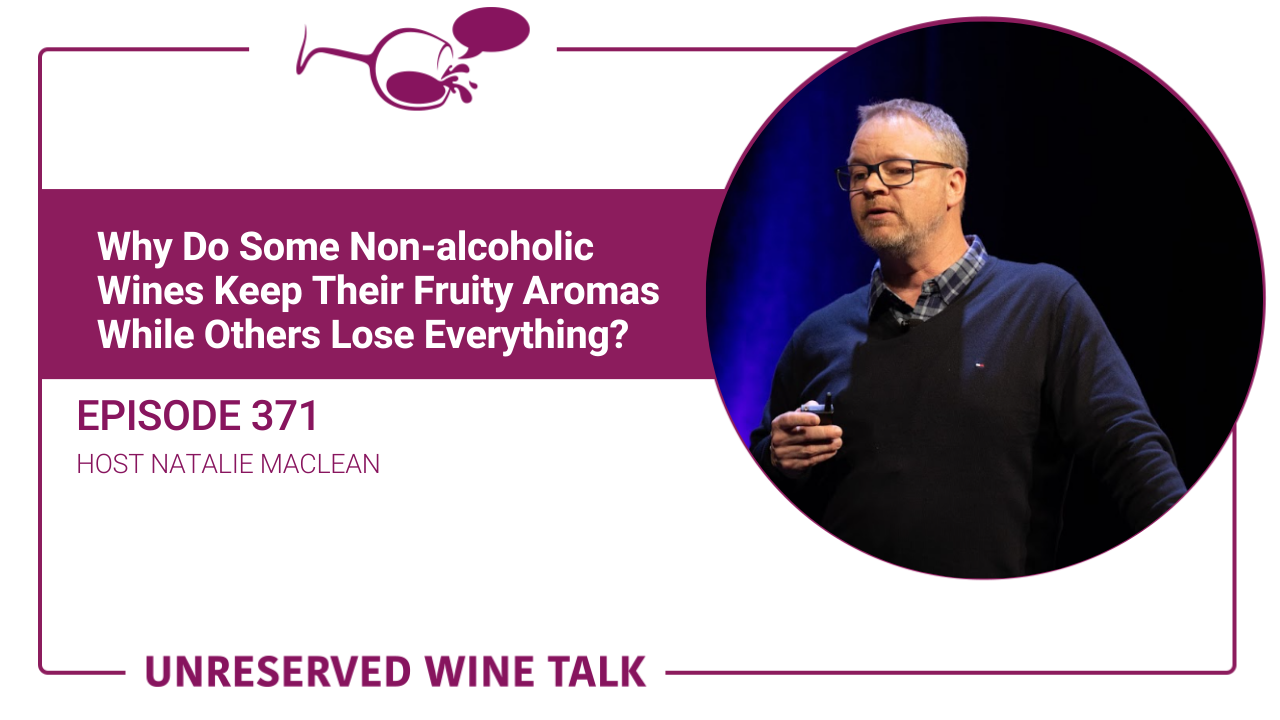
In this episode of the Unreserved Wine Talk podcast, I’m chatting with Dr Wes Pearson, a senior research scientist at the Australian Wine Research Institute in Adelaide.
You can find the wines we discussed here.
Join me on Instagram, Facebook and YouTube Live Video
Join the live-stream video of this conversation on Wednesday at 7 pm eastern on Instagram Live Video, Facebook Live Video or YouTube Live Video.
I’ll be jumping into the comments as we watch it together so that I can answer your questions in real-time.
I want to hear from you! What’s your opinion of what we’re discussing? What takeaways or tips do you love most from this chat? What questions do you have that we didn’t answer?
Want to know when we go live?
Add this to your calendar:

Highlights
- How was the German winemaker, Carl Jung, a pioneer in the field of no and low alcohol wine?
- Why is the reverse osmosis process better suited to small alcohol adjustments rather than full dealcoholization?
- How has the spinning cone column become one of the most effective tools for removing alcohol from wine?
- Why is it so challenging to preserve flavour and aroma in non-alcoholic wines?
- Why are low alcohol wines often more successful than alcohol free wines?
- How can vineyard and fermentation choices reduce alcohol while preserving wine character?
- Why do lower alcohol wines preserve a sense of place more successfully than fully dealcoholized wines?
- How do beer producers have more technical options for making low alcohol products than winemakers?
- What is the connection between alcohol and mouthfeel?
- Why is Sauvignon Blanc often the most successful base for alcohol free wine?
- How does Wes envision the future of non alcoholic wine?
Key Takeaways
- How did winemakers first figure out how to remove alcohol from wine without destroying it?
- I haven’t heard about anybody doing anything different prior to Carl Jung. The story goes that he was somewhere in India, in the Himalayas, and he noticed that water boiled at a lower temperature and started thinking about, oh, well you know, they had a family winery and I wonder if we can take ethanol out if we boiled it at a lower temperature. Understanding, of course, classic distillation ethanol boils at around 70-something degrees and water would boil at 100. So you could boil your ethanolic solution, remove the ethanol, trap it on this side, leave your water here or whatever solution you have your ethanol in, and then keep the ethanol. That’s classic distillation. Normally we keep the distillate, we keep the alcohol, and get rid of what we’ve taken it out of. Now we want to keep what we’ve taken it out of and get rid of the ethanol. So that was the whole premise behind vacuum distillation.
- Why is it so difficult to perfect the flavours and aromas in wine once the alcohol is removed?
- When that wine comes off the spinning cone column, it’s not a pleasant drink. It’s extremely acidic. You’ve concentrated the acids by about a third, and as well, you’ve lost all the flavor. Also the flavor that balances out all that acid is gone as well. We need to do a lot of work in building that back up. We should use more tools that we have to try to build some of these up, to build flavor. Now, of course, from the economics behind this, these are not expensive products. So we can’t just whack everything in there and hope for the best. We have to have some judiciousness when it comes to how much these things cost and how much you can add, and how we can do this to recover what we’ve taken out and put back so that it’s more cost effective. This is all part of the research that we’re working on.
- Why do some non-alcoholic wines keep their fruity aromas while others seem to lose everything?
- When the yeast eat the sugar in the grape juice, those sugars are all attached to all kinds of other chemical compounds. The yeast come along, they eat the sugar, and release the flavor compound. And so those fermentation products, most of them are esters and organic acids. Now the esters are the really pretty things that we smell, all the fruity flavors. And the organic acid portions of those, they’re less appealing. Now, when you put those through the dealcoholization machine, the spinning cone column in particular, you get the stinky stuff staying, and you get the nice stuff going. Within Sauvignon Blanc, you lose the acetate, but actually three-mercaptohexanol smells lovely. It smells like passion fruit, and so that stays. Where if your wine doesn’t have thiols, something like Chardonnay, which is much lower in thiols, you don’t get that retention of that character.
About Dr. Wes Pearson
Dr Wes Pearson is a senior research scientist and sensory group manager at the Australian Wine Research Institute in Adelaide. He holds a BSc in Wine Biochemistry from the University of British Columbia, a diploma in Applied Sensory and Consumer Science from the University of California Davis and a PhD from Charles Sturt University. He has worked in the sensory group at the AWRI since 2010 and has completed hundreds of sensory studies and authored over 25 research papers in that time. He is an alumnus of the Len Evans Tutorial and of Wine Australia’s Future Leaders program and sits on the board of directors for the McLaren Vale Grape Wine and Tourism Association. He has judged at multiple capital city and regional wine shows and has been an educator/judge for the AWRI’s Advanced Wine Assessment Course for more than a decade. He is also an accomplished winemaker, having made wine in Canada and France, and currently makes wine under his Juxtaposed label in McLaren Vale, South Australia.
Resources
- Connect with Dr. Wes Pearson
- Website: Juxtaposed.com.au
- Natalie’s Appearance on CityTV’s Breakfast Television | Fashion Meets Fermentation: Which 5 Drinks Pair Best with Your Closet?
- Seedlip Spice 94, Non-Alcoholic Spirit – England
- Seedlip Grove 42, Non-Alcoholic Spirit – England
- Campo Viejo Cava – Brut, Spain
- Saintly The Good Sparkling Rosé – Canada
- Oyster Bay Sauvignon Blanc – Marlborough, New Zealand
- Phantom Creek Cabernet Franc – Okanagan Valley, British Columbia
- Unreserved Wine Talk
- My Books:
- Wine Witch on Fire: Rising from the Ashes of Divorce,Defamation, and Drinking Too Much
- Audiobook:
- Audible/Amazon in the following countries: Canada, US, UK, Australia (includes New Zealand), France (includes Belgium and Switzerland), Germany (includes Austria), Japan, and Brazil.
- Kobo (includes Chapters/Indigo), AudioBooks, Spotify, Google Play, Libro.fm, and other retailers here.
- Wine Witch on Fire Free Companion Guide for Book Clubs
- Audiobook:
- Unquenchable: A Tipsy Quest for the World’s Best Bargain Wines
- Red, White, and Drunk All Over: A Wine-Soaked Journey from Grape to Glass
- Wine Witch on Fire: Rising from the Ashes of Divorce,Defamation, and Drinking Too Much
- My new class, The 5 Wine & Food Pairing Mistakes That Can Ruin Your Dinner And How To Fix Them Forever
Tag Me on Social
Tag me on social media if you enjoyed the episode:
- @nataliemaclean and @natdecants on Facebook
- @nataliemaclean on Twitter
- @nataliemacleanwine on Instagram
- @nataliemaclean on LinkedIn
- Email Me at [email protected]
Thirsty for more?
- Sign up for my free online wine video class where I’ll walk you through The 5 Wine & Food Pairing Mistakes That Can Ruin Your Dinner (and how to fix them forever!)
- You’ll find my books here, including Unquenchable: A Tipsy Quest for the World’s Best Bargain Wines and Red, White and Drunk All Over: A Wine-Soaked Journey from Grape to Glass.
- The new audio edition of Red, White and Drunk All Over: A Wine-Soaked Journey from Grape to Glass is now available on Amazon.ca, Amazon.com and other country-specific Amazon sites; iTunes.ca, iTunes.com and other country-specific iTunes sites; Audible.ca and Audible.com.
Transcript
Natalie MacLean 00:00:00 How did winemakers first figure out how to remove alcohol from wine without destroying it? Why is it so difficult to perfect the flavors and aromas in wine once the alcohol is removed? And why do some nonalcoholic wines keep their fruity aromas while others seem to lose everything? In today’s episode, you’ll hear the stories and tips that answer those questions in part two of our chat with Doctor Wes Pearson, a senior research scientist at the Australian Wine Institute in Adelaide. You don’t need to have listened to part one from last week first, but if you missed it, go back and have a listen after you finish this one. By the end of our conversation, you’ll also discover how the German winemaker, Carl Jung was a pioneer in the low and no alcohol wine movement. And no, not the psychologist, another Carl Jung. Why? The reverse osmosis process is better suited to small alcohol adjustments than to full diagonalization. How the spinning cone column has become one of the most effective tools for removing alcohol from wine, while preserving flavor and aroma in non-alcoholic wines is so challenging.
Natalie MacLean 00:01:08 Why low alcohol wines are often more successful than alcohol free wines. How vineyard and fermentation choices can reduce alcohol while preserving wine character. Why lower alcohol wines preserve a sense of place more successfully than fully decolonized wines. How beer producers have more technical options for making low alcohol products than winemakers. The connection between alcohol and mouthfeel. Why? Sauvignon Blanc is often one of the most successful bases for alcohol free wine, and how Wes envisions the future of non-alcoholic wine.
Dr. Wes Pearson 00:01:54 Do you have a thirst to learn about wine? Do you love stories about wonderfully obsessive people, hauntingly beautiful places, and amusingly awkward social situations? Well, that’s the blend here on the Unreserved Wine Talk podcast. I’m your host, Natalie MacLean, and each week I share with you unfiltered conversations with celebrities in the wine world, as well as confessions from my own tipsy journey as I write my third book on this subject. I’m so glad you’re here. Now pass me that bottle, please, and let’s get started.
Natalie MacLean 00:02:36 Welcome to episode 371. So what’s new in the drinks world this week? Well, we’re seeing the rise of.
Dr. Wes Pearson 00:02:44 The.
Natalie MacLean 00:02:45 Active alcohol, a new category of boutique wine waters. And yes, I’m doing lots of air quotes with my fingers blending French grapes with sparkling mineral water to target the fitness conscious crowd. Meanwhile, there’s also active alcohol hydration. The California based executive beverage company that sounds ominous has officially launched Boutique Wine Water It’s a better for you category that treats wine like an electrolyte drink. Blending premium French reds with sparkling water to cater to the active, ingredient. Conscious drinkers who want a buzz, presumably after a marathon. This is just bizarre anyway. Athletic brewing has teamed up with OpenTable to launch Athletic January, a campaign that integrates non-alcoholic pairings directly into restaurant reservation flows to remove the social friction of not drinking. Meanwhile, one of the unofficial campaigns I noticed this week was the ongoing battle between orange wine and the new darling of natural leaning wine lists, and that would be chilled reds. It’s not being pitched as a trend so much as a public service announcement. For anyone who’s ever loved a wine bar but feared the word funky, high end lounges are moving away from traditional Cristal toward 3D printed glassware.
Natalie MacLean 00:04:08 Yes, one of the most talked about vessels this week is a hollowed out pair made of translucent resin that’s designed to change color as the cocktail inside reacts with the air turning from a pale gold to a vibrant pink. That is kind of cool. After years of minimalist one perfect ice cube restraint, bartenders are leaning into maximalist drinks with dramatic garnishes, briny foams, smoky aromas and glassware that looks like it came from a prop department. It’s not just for show, either. The new version of maximalism is trying to be clever edible garnishes, less waste, more sensory tricks, and a big wink to social media without tasting like a photo shoot. Next up, the Kit Kat Scotch. Mixology has taken a turn for the wafer thin bar. A new cult favorite has been born, the Kit Kat, so it’s a Scottish whiskey sour infused with actual Kit Kat bars and Koji, the Japanese fermentation mold, resulting in a sweet and savory drink that tastes like a biscuit. Alcoholic candy bar, okay. And the MSG martini, the savory cocktail trend has reached its final form with the official arrival of MSG as a primary ingredient.
Natalie MacLean 00:05:26 Bartenders are now using monosodium glutamate to add a super umami depth to martinis and whiskey highballs, claiming it makes the botanical notes of the spirit pop like a culinary dish. For your calendar this week, kick off with National Tempura Day on January 7th. Dip crispy shrimp into soy ginger sake, or the perfect excuse to pop a crisp VK. Sparkling wine. The bubbles and acidity will act as a scrubbing brush for the palate against the fried batter. Trivia time. Tempura sailed from Portugal to Japan in the 1500s. And did you know that January 9th is Houseplant Day, which begs for boozy terrariums with vermouth, mist, or herb fused gins? My poor houseplants. Yeah, I should put them to better use in one of these cocktails. National Bittersweet Chocolate Day is January 10th. Screams out for mezcal, truffles or rum laced ganache dips. It’s also National Oysters Rockefeller Day on January 10th for a briny, bubbly pairing. The dish was created at Antoine’s, a New Orleans restaurant, and named for its rich Rockefeller feel.
Natalie MacLean 00:06:39 January 11th is National Hot Toddy Day, a perfect excuse to choose your own adventure? Toddy at home. Whiskey, brandy or rum? Honey. Versus maple syrup. Lemon versus orange. Then a spice tray. Cloves, cinnamon, star anise, whatever you like. It’s the most flexible of classic warm drinks, which is why every household, or many of them, claims theirs is the real one. National Mocktail Week starts January 11th. Whip up zero proof zombie cocktails with pineapple, shrubs and flaming hibiscus or host sober mix offs. Fun fact bitters originated in the 1820s as stomach aches for sailors. January 12th is National Curry Chicken Day, which is basically a permission slip to open something aromatic and slightly off dry and call it meal planning. January 13th we hit National Peach Melba Day. Skip the spoon and try the liquid version by pairing a chilled Late Harvest Riesling with a raspberry infused vodka float. And finally, January 13th is also National Gluten Free Day. Fun ways to celebrate a fully gluten free snack board with zero proof booze options.
Natalie MacLean 00:07:50 If you have some wine, news or a quirky story you think I should share on the podcast. Email me at Natalie at Natalie MacLean. Com. Recently, on city TV’s Breakfast television, we did something a little different. We paired drinks with your winter wardrobe. Yep, we went there. So fashion meets fermentation. We matched the textures of your favorite winter pieces with the sips of the season. Wine is like fashion for your taste buds. I’ve always believed some days you want bold and structured. Other days you want soft and flowing. And some days you just want to wear sweatpants and drink boxed wine. But we’re not recording that episode today. And of course, I turned it into a game. Our host, Tim had to guess which drinks pair best with which wardrobe piece. So we did a mashup between the closet and the cellar. Finally, a reason to justify my two shopping habits, both of which need serious interventions. So we have five fashion staples. A cashmere sweater, a classic trench coat, a silk scarf, a crisp linen shirt and a little black dress.
Natalie MacLean 00:08:54 And we have five drinks to match. So let’s dive in with this speed dating. The first drink is Seedlip Spice 94, a sophisticated non-alcoholic spirit perfect for those wanting an elegant drink without the alcohol. Feel free to try it as you. Guess which fashion piece pairs best with it? Well, good. Guess this does pair with a cashmere sweater, because Seedlip Spice 94 is crafted from a unique blend of aromatics with warm notes of baking spices and citrus and hint of spice, it delivers a sophisticated and complex flavour profile that elevates any non-alcoholic cocktail. Perfect for hosts looking to impress every guest at the table. You get these warm, spice LED flavours from all spice berries sourced from Jamaica. Citrus top notes from lemon and grapefruit peels and a long, bitter finish from high quality barks. It wraps around you like your favourite cashmere sweater. Soft, comforting and warming with these gorgeous, aromatic layers that keep you coming back for more. And unlike actual cashmere, this won’t kill or shrink to the size of a doll’s outfit if you look at it the wrong way.
Natalie MacLean 00:10:04 Fun fact Seedlip was the world’s first distilled non-alcoholic spirit when it launched in 2015. The founder spent two years perfecting the recipe, using a 300 year old distillation method from a farmers handbook. What do you know? Versatile and aromatic, Seedlip Spice 94 works beautifully in both classic and modern nano cocktails. Enjoy it simply over tonic with ice, garnished with pink grapefruit. Peel in a non-alcoholic espresso martini or with ginger ale and ice garnished with a full orange moon. These effortless serves. Offer a refined, balanced experience for any gathering. And if someone loves this style, what else should they explore? Well, they could try. Cedar Grove 42. Another elk spirit from the same producer that has bright and citrus forward notes of blood orange, mandarin and lemongrass. While spice 94 gives you those warm winter spices. Grove 42 brings the sunshine and zest, making it a great option for non cocktails with a lighter profile. And I have to say, the non ALC spirit category has evolved so much that you can now be sober and still be more interesting than everyone else at the party, or at least you’ll think so.
Natalie MacLean 00:11:20 For a pairing, I’d try a spiced butternut squash soup with toasted pumpkin nut seeds, the velvety golden soup echoing the warm, spiced notes in the Seedlip, while the crunchy seeds add textural contrast. Steam rises from the bowl, carrying hints of nutmeg and sage that mingle beautifully with the cardamom notes in your class.
Next up, let’s go for bubbles. This is the Campo Viejo cava. As you try it, think about which fashion piece you think belongs with this Spanish sparkler, and know yoga pants is not one of the options, though I respect the need to reach for comfort. Yes, you’ve got it. Campo Viejo pairs perfectly with that classic trench coat you’ve had for years. You know, the one timeless, elegant goes with anything. It gives you that mysterious vibe of I might be an international spy, or I might just be going to the pharmacy to buy toothpaste. Who knows? This Spanish sparkler is made using the traditional method, just like champagne, but at a fraction of the price you’ll get beautiful, fine bubbles, crisp green apple, citrus and freshly baked bread notes from the extended lees ageing, which is the spent yeast.
Natalie MacLean 00:12:29 It’s the overachiever of the sparkling wine world, delivering champagne quality without the champagne attitude. It’s bone dry, refreshing, and has that effortless sophistication. Like your trench coat. It works from everything from a Tuesday morning meeting to a Saturday night celebration. The finish is clean and bright, with a subtle Ullman note that keeps you coming back for another sip. Fun fact. Did you know that kava must be aged for a minimum of nine months? But many producers age it much longer. That extended contact with the yeast gives it those beautiful, toasty brioche notes that make it so complex. Nine months. That’s longer than most of us. Stick with our New Year’s resolutions. So this wine actually finishes what it starts. If you love kava, you could also try a crema from France, which also gives you elegance at a great price point. Same celebration in the glass, just with different accents for pairings. Try some smoked salmon Bellini’s with crème fraiche and fresh dill. These delicate buckwheat pancakes are topped with silky pink salmon, its smokiness balanced by the tangy cream.
Natalie MacLean 00:13:37 The dill adds a bright, herbaceous note that dances with the citrus in the cava, while those bubbles scrub your palate clean between bites. We’re on a roll.
Next up, we’re staying with bubbles, but adding some colour. This is Saintly The Good Sparkling Rosé. As you try it, think about which wardrobe piece matches this pretty in pink sparkler from Ontario. Exactly right. You’re on a roll too. This gorgeous pink sparkler pairs with that silk scarf you wear when you’re feeling happy. You know, the one that feels like liquid luxury? I think this pink bubbly looks like a winter sunset in a glass. It’s delicate and refined, with flavours of fresh strawberries, raspberry, and a hint of rose petal. The bubbles are fine and persistent, creating that creamy mousse texture on your palate. There’s a lovely balance between the fruit sweetness and the crisp acidity, making it dangerously easy to drink. The finish is clean with a whisper of citrus zest. This is winter rosé. It knows how to dress in layers.
Natalie MacLean 00:14:34 Unlike me, who just keeps adding sweaters until I can’t move my arms. Fun fact. Sparkling rosé gets its colour from brief contact with red grape skins, typically just a few hours. This short maceration or steeping gives it that beautiful blush hue without extracting too much tannin, keeping it light and elegant. It spends just enough time to make an impression without getting drawn into the drama. If you like this, you could also try a rosé prosecco from Italy for a fruitier expression. Or if you really want to splurge, rosé champagne is a terrific expression of the style. For pairings, try prosciutto wrap figs with goat cheese and honey drizzle. The figs are plump and jammy. Their sweetness amplified by a golden thread of honey. The salty prosciutto adds a savoury depth, while tangy goat cheese creates the perfect contrast. It’s a flavour combination that mirrors the wine’s own balance of fruit and acidity.
Next up, we’re moving to what I call a frosty winter white. This is the Oyster Bay Sauvignon Blanc from New Zealand.
Natalie MacLean 00:15:35 As you sip. Think about which pairs best with a refreshing white. This pairs beautifully with the crisp linen shirt that somehow makes you look clean, fresh and effortlessly elegant. At least your wine will be wrinkle free. Oyster Bay Sauvignon Blanc from New Zealand, was named the best Sauvignon blanc in the world at a prestigious competition. And that, my friend, is like winning gold at the Refreshment Olympics. This wine is bursting with bright citrus flavours of lime, grapefruit and passion fruit. Fun fact New Zealand’s Marlborough region has a unique combination of intense sunshine during long winter days and cool nights, which gives the grapes incredible flavour concentration while maintaining that electric acidity. The result is a wine with more intensity and vibrancy than Sauvignon Blanc from anywhere else in the world. If you like this style, try Grüner Veltliner from Austria for something with similar brightness, but with white pepper and mineral notes. Or explore albino from Spain for crisp acidity with stone fruit flavours. For pairings, try seared halibut with herb butter and roasted asparagus.
Natalie MacLean 00:16:46 The fish is pristine white, its delicate flakes barely holding together while the herb butter melts into golden pools. Asparagus spears are charred at the tips, their grassy sweetness enhanced by roasting, creating the perfect bridge to the wine’s herbaceous notes.
And finally, we’re finishing with some Canadian showstoppers. I have the Phantom Creek Estates, Riesling and Cabernet Franc from British Columbia. We’re going to focus today on the red, and we have one fashion piece left that little black dress. So do you think this wine pairs with it? You would be correct. This bold Cabernet Franc is exactly like the little black dress that makes you feel like you can conquer anything. It’s classic, powerful and always appropriate. Phantom Creek Cabernet Franc, a premium British Columbia wine, showcases the absolute best of Okanagan Valley wine making. Their commitment to quality means you get concentrated dark fruit flavours, beautifully structured tannins and the kind of complexity that rewards slow, thoughtful savouring on long winter nights. The wine offers a bold character and full body, delivering layers of blackberry, dark cherry, licorice, and cedar.
Natalie MacLean 00:17:53 You’ll find velvety tannins that coat your palate without overwhelming it, achieving that perfect balance between power and elegance. The wine’s depth and intensity make it an ideal companion for fireside gatherings, whether you’re hosting friends or enjoying quiet solo moments of reflection. Supporting Canadian wineries during the winter also means that you’re enjoying wines made to complement the seasons you experience, not a mediterranean climate halfway around the world. These grapes know what -20 feels like. They get it. If you love this wine, try Plavix Malli from Croatia. For something bold and structured and halfway around the world with a mediterranean climate. It’s a little bit contradictory of me to say. But anyway, it has similar dark fruit intensity and herbs. You could also explore Shennong from France’s Loire Valley, where Cabernet Franc really shines with earthy elegance, or venture into Merlot for that same plush texture with more chocolate notes. For pairings, try braised ribs with red wine reduction and creamy polenta. The meat is fall apart, tender, braised for hours until it surrenders to your fork.
Natalie MacLean 00:18:59 The glossy reduction sauce clings to each morsel, yes, its concentrated flavours matching the wine’s intensity, while the polenta provides a rich, creamy foundation that soaks up all those gorgeous juices.
Oh my gosh, I’m salivating. Are you all right? So my final words of wisdom life’s too short for bad wine and uncomfortable shoes though. I’m working on the shoe part. But seriously, whether you’re matching wine with fashion or just making it through the winter. The key is to find what brings you joy. Sometimes that’s a perfect pairing. Sometimes it’s just wearing your comfiest sweater and drinking whatever makes you smile. The real elegance is knowing the difference between what looks good and what feels good, and being brave enough to choose the latter when it matters. On Instagram, I’m at Natalie MacLean wine and online. Well, you know where to find me. I’ll be mentioning it a bunch of times on upcoming TV shows such as CTV’s Your Morning and all the rest. You know, all the shows will be chatting about terrific wines and spirits for Valentine’s Day and romantic dinners, as well as those for Galentine’s Day and romance that celebrates the more lasting bond of friendship.
Natalie MacLean 00:20:11 I should know then we’ll be chatting about fresh spring wines from Arch Saint Patrick’s Day, y’all. My grandmother was a Brophy wines, beers and spirits and environmentally sustainable drinks for Earth Hour. Let me know if you would like your brand featured on these TV segments or future ones, or if you would like to advertise with us through our podcast, newsletter, website, social media or mobile apps, please email me at Natalie at Natalie MacLean dot com. If you’re reading the paperback or e-book or listening to the audiobook of my memoir, Wine Witch on Fire Rising from the Ashes of Divorce, defamation, and Drinking Too Much, a national bestseller in one of Amazon’s Best Books of the year. I’d love to hear from you at Natalie of Natalie MacLean dot com. I will put a link in the show notes to all retailers worldwide at Natalie MacLean. Com. 371. Okay, on with the show.
Dr. Wes Pearson 00:21:10 So let’s talk.
Natalie MacLean 00:21:11 A little bit of the history of nonalcoholic wines. It was a German family winemaker, Carl Jung, not Freud’s disciple who first reduced alcohol in the 1800s.
Natalie MacLean 00:21:21 Was he the first creating non-alcoholic wines?
Dr. Wes Pearson 00:21:25 I think so. I haven’t heard about anybody doing anything different prior to him. The story goes that he was somewhere in India, in the Himalayas, and he noticed that water boiled at a lower temperature and started thinking about, oh, well, how would I, you know. They had a family winery, and I wonder if we can take ethanol out if we boiled it at a lower temperature. Understanding, of course, that classic distillation ethanol boils at around 77 degrees and water would boil at 100. Of course. So you could boil your ethanol solution, remove the ethanol, trap it on this side, leave your water here or whatever solution you have the ethanol in, and then keep the ethanol, right. That’s classic distillation. Normally we just keep the distillate. We keep the alcohol and get rid of what we’ve taken it out of. Now we want to keep what we’ve taken it out of and get rid of the ethanol, you know, and you started playing with different vacuums and being able to lower the air pressure to be able to remove the ethanol at a lower temperature.
Dr. Wes Pearson 00:22:21 Well, you’ve now pretty much cooked your wine, so if you can lower that pressure and do it in a vacuum, now you can boil that ethanol off at, say, 40 degrees, 35 degrees. And now you haven’t destroyed the wine from a temperature perspective like you would have if you were boiling it to distill it. So that’s the whole premise behind vacuum distillation.
Natalie MacLean 00:22:42 Okay. So that was one of the first early methods, although vacuum distillation I guess has been around since 3600 BCE. But anyway, Carl Jung, he does seem famous for it in terms of marketing it and creating a brand from it. How is that different from reverse osmosis? Ro and when did that come about as it relates to creating non-alcoholic wine?
Dr. Wes Pearson 00:23:04 So that technology was developed in the 70s and the 80s. And the difference between reverse osmosis is that’s a that’s a Membrane process. That’s a membrane distillation. So you’re not heating anything up. You’re passing something through a membrane. So technically that’s quite different. And structurally as well for how you remove the alcohol through reverse osmosis.
Dr. Wes Pearson 00:23:28 We’re pushing something with the pump in the reverse direction from a high alcoholic solution to a very low alcoholic solution to remove the ethanol. So imagine, if you will, you’ve got the ethanol going this way, and you’ve got water going this way. And the ethanol is being pushed through membrane into the water coming out. So you’re removing ethanol from the top stream in putting it into the bottom stream. And that’s based on the gradient of being high alcohol and no alcohol. So the problem with reverse osmosis is that as your alcoholic portion decreases in ethanol, that gradient becomes lower and lower. So you need more and more water or whatever it is that you’re using to drive that. So that’s why we see our reverse osmosis used as an alcohol adjustment technique and not a decolonization process.
Natalie MacLean 00:24:20 So if like in warmer climates like California or even Australia, if you’re hitting 15, 16% alcohol, you might want to take it down a couple of points or whatever.
Dr. Wes Pearson 00:24:29 That’s where we see reverse osmosis used significantly. And it’s an easy process to use here.
Dr. Wes Pearson 00:24:34 We have many contract processors who can come through, adjust your wine very quickly and easily, and quite cost effectively as well. The technology is much cheaper and more accessible, but it’s more an adjustment as opposed to a complete diagonalization. You get to about five, six, 7% and it starts to lose its effectiveness. And so now you’re using a lot more resources, energy, water to try to get that last little bit. And it ceases to become economically viable when there are other options for removing alcohol. So that’s where we tend to see reverse osmosis use. But you get a different final product. It works different. The flavor compounds that are in the wine, they’re affected differently than what we see with vacuum distillation.
Natalie MacLean 00:25:15 Then another technology or method is the spinning cone SCC, originally invented by Australia’s Commonwealth scientific and industrial research organisations CSIRO in the 60s to capture delicate passionfruit aromas that were being lost in fruit juice concentration. So how does that work with wine?
Dr. Wes Pearson 00:25:35 So that is also a vacuum distillation unit and it’s a pretty clever little machine.
Dr. Wes Pearson 00:25:40 Imagine if so you’ve got a column. And in that column you’ve got, for lack of a better word, dinner plates stacked dinner plates all down this column, and one of them spins and the next one is fixed. What happens is that the liquid is pushed through the top, and it hits one of the spinning plates, and centrifugal force spreads out the liquid along the plate. Now, while that’s happening, this cone is under a strong vacuum and steam is being injected from the bottom. So the wine is coming through the top and the steam is coming up from the bottom. You’ve got these plates where the centrifugal force is spread out the liquid to a very, very thin layer. And as the steam moves up, it takes the alcohol, it passes it out through the top, and the wine comes out through the bottom. And so and because it’s under a strong vacuum, it happens at about 35, 37 degrees. Again, as I mentioned before, with vacuum distillation, you’re not cooking the wine.
Dr. Wes Pearson 00:26:37 You’re doing it gently. So that’s been a technology that has been pretty well adopted here in Australia and globally for the complete decolonization of wines. They started off doing passion fruit juice and a few other things, and then they figured out actually, it was really good at getting alcohol out of the wine. And it’s since shifted into that role in the wine and also machine. They used to make freeze dried coffee, and they use it in a lot of their food processing applications. But it really works really good at getting alcohol out of wine. So that’s something that we’ve been working on, working with the companies that build those for a few years, trying to optimize that, to try to get it, to leave as much flavor in the finished product as it can, because that’s similarly to all the other doc methods. You tend to lose a lot of flavor while you also lose the ethanol.
Natalie MacLean 00:27:24 Right. And is there a way to put back the flavor? Get rid of the alcohol, but put back the flavor compounds to the remaining liquid.
Dr. Wes Pearson 00:27:31 You know, that’s one of the things that we’re working on. You have the ethanol that comes off that, of course, all the flavor that was in the wine is now in the ethanol. So now the trick is to remove the flavor from the ethanol, to be able to put that back in the wine, of course, because you can’t add the ethanol back. But removing those flavor compounds from the ethanol solution has proven to be pretty difficult. And so what we tend to see is that if you’re trying to make a no alcoholic product, so that would be an ethanol level less than 0.05. So basically just the trace. You can’t add any of that back. But if you’re willing to make 2.5, which I would think most of the products on the market these days are around, that you can add a little bit of that flavor back to get that concentrated ethanol and flavor back to your last one, to get to that point, 5% alcohol. And then you get a lot of flavor with that as well.
Dr. Wes Pearson 00:28:24 So that’s something that people have been doing. But working on getting that flavor out of the ethanol as a grip, that’s quite a challenge. We’re looking at a few different things to try to work on that.
Natalie MacLean 00:28:33 And is that because ethanol is a very sticky molecule or something like it doesn’t want to release the flavor component that’s in it?
Dr. Wes Pearson 00:28:41 Yeah. Those flavor compounds, for lack of a better way to describe it. They love being in the ethanol. They’re very comfortable and they’re very stable in that. To get them to come out of that solution and to go into something that’s water based, for instance, it’s very tricky. They’re quite happy to be there and so they don’t want to be disturbed.
Natalie MacLean 00:29:01 Similarly, I don’t want to be disturbed when I have a glass of wine, so take me away from it. Of course, one of the barriers for widespread use of the spinning cone is that there are $1 million a piece, which prevents small and medium wineries from experimenting. Do you think this technology will become more accessible, like will it come down in price? The way computers exponentially have gotten more and more powerful and more and more affordable?
Dr. Wes Pearson 00:29:26 I don’t think so.
Dr. Wes Pearson 00:29:27 Because a big machine’s the ability to scale. There’s not a lot of potential in that. I think what might happen is that there aren’t many of these machines at the moment. And so if you want to process, say, I’m a new business, I want to make some wine or make a note or a low alcohol wine. I would engage the contractor to help process my wine, to do the new product development, all of those things. But it’s expensive. And we’re talking about products here. We’re not talking about premium products. No, local wines are generally not very expensive sub $20. So when you’re looking at that category, it’s hard to justify adding all these costs to your product that you’ve already developed, all the wine you grow in, the grapes, you turn them into wine, stored them, all of this stuff. Now you’re going to add more cost to it. When you run the economics, you’re like, I don’t know if I want to take this chance.
Natalie MacLean 00:30:20 Especially when consumers view it as, oh, I’m paying for something that doesn’t have alcohol.
Natalie MacLean 00:30:24 It should be cheaper than an alcoholic product.
Dr. Wes Pearson 00:30:26 That’s exactly right. I’m getting less, so I want to pay less. That’s been a problem and a bit of a barrier to because I feel like in lots of industries, not just the wine industry, but certainly it’s true in the wine industry, is that you see a lot of innovation and progression from the small producers, right? People who aren’t afraid to take risks and try things. There’s learnings in that. The bigger companies look at that and they go, oh, that didn’t work. We’re not going to do that. But that won’t work pretty good. How do they do that? And then there’s adoption, right. And then the adoption happens through the industry and it works its way up in this product category. It starts at the top because of the costs involved, right? And the risks involved. And so small producers, they don’t have the opportunity to play in this space. In the same way the innovation or the curve of these products has worked in a different way than it’s traditionally has, and it’s a bit of a barrier for small producers to get into it.
Dr. Wes Pearson 00:31:21 They’re not willing to invest in $1 million machine to process their grapes, and also probably doesn’t fit their brand M.O., right. Like there’s small wineries, larger wineries are more that could be, you know, their drinks company or beverage company more happy to play in that space that’s not foreign to them, where it’s kind of like small producers, like, what is that? I don’t want to do any of that. It’s just much more kind of trepidation around it.
Natalie MacLean 00:31:43 Absolutely. So just summarizing quickly some of the other techniques that can keep alcohol lower, picking grapes earlier in the season. You’re going to get sugar levels that are lower. So there’s less alcohol for the yeast to eat and convert into alcohol would be one. Others are letting leaves or the canopy grow thicker, shielding the grapes from the ripening sun. Some are experimenting with so-called lazy yeasts, which I presume don’t convert as much of the alcohol they give up early. Others are managing their fermentation, perhaps the temperature or how long the ferment goes, or stopping it early and getting residual sugar, but lower alcohol.
Natalie MacLean 00:32:21 Do you see these techniques being effective, or is one kind of emerging versus the others in terms of making good low alcohol wines?
Dr. Wes Pearson 00:32:31 I think there are levers that they can pull to bring their alcohol levels down. Won’t get to zero or even 2 or 5. There’s a fairly good proliferation of wines in the New Zealand, lighter from their project that was running in the mid teens, where they they missed out a lot of research and R&D into figuring out how they could pull back the sugar, slow down the plant from producing its sugar while still phenolics and phonologically ripening the grapes.
Natalie MacLean 00:33:04 Getting those flavors.
Dr. Wes Pearson 00:33:05 Yeah. That’s right. So you’re harvesting ripe grapes, but at lower sugar levels. And we see those wines and, you know, they’re between 8 and 10%.
Natalie MacLean 00:33:11 Doctors, I think is one of them. And it’s done a good job.
Dr. Wes Pearson 00:33:14 Of Pinot noir as well. So what I really like about those wines is that they’ve reduced the alcohol by a good 20, between 20 to 30%, maybe, you know, 25 ish.
Dr. Wes Pearson 00:33:23 They still look like the variety that they are. They’re quite palatable. They’re pretty good wines. And I think certainly smaller producers, smaller to medium sized wine producers look at that and go, now that’s something that we can do. We can adopt that and make that work within our business. Right. You’re just using viticulture to slow down the ripening. You know, you’re using a yeast that converts sugar to a lower rate, right? You might get 1% alcohol out of that. But, you know, we’ve got so much sugar in grape juice, it has to go somewhere. And until we figure out a better way to. Alcohol is the most efficient thing to turn it into, right? What do we create? When we ferment fermentation, the yeast ferment the sugar and they turn. They produce heat, carbon dioxide and alcohol. Now we can potentially push the pathway to produce more carbon dioxide. But I don’t think that’s a great answer either. That’s a lot of carbon dioxide. Now we’re putting into the atmosphere.
Dr. Wes Pearson 00:34:17 This is maybe not the answer. So where are we going to do with all this sugar. Right. So a good option is to try to slow the sugar production down. So I do think there’s some traction there. And I think those ones in particular are going to get better. And there’s also a premium option with that too. Right I think as you mentioned, when you take the alcohol out, consumers are like, well, I’m not paying more for that. I want to pay less. But if you still have a product that’s just got 2 or 3 degrees, alcohol less still looks like the variety. It still comes from place. It has all those wine cues that we all think are important. We all enjoy. And then you can charge accordingly. Right. You don’t have to discount the product because you’ve taken the alcohol out. I think that’s a way forward for sure.
Natalie MacLean 00:34:58 Yeah, absolutely. I’m going to summarize what beer makers do quickly. Correct me if anything is not right or accurate.
Natalie MacLean 00:35:05 As I understand it, beer makers have a few more ways they can alkalis their products that are not available to winemakers because brewers first need to soak their grains, like wheat or barley, in a warm or hot water to release the sugars so that the yeasts can eat them and make the alcohol, whereas the yeast go right to town on the grapes. This is for the brewers. It’s called the mash, and they can drain off the beer and reuse the mash to make another batch of weaker beer. Kind of like reusing a teabag in several cups of hot water. Another method is to use colder water with the mash, which will also make a lower level of alcohol because heat speeds up extraction and solubility. Just like if you put your teabag in a cold water. A cup of cold water. Is that accurate? And is this sort of exclusive to beer makers versus winemakers?
Dr. Wes Pearson 00:35:54 Yeah. No, that’s totally correct. Those are a bit more old school methods. I think one of the new ways of seeing with beer is using specific yeasts.
Dr. Wes Pearson 00:36:04 So one of the differences in beer, first of all, is the sugars that you get from the mash. Right. Grape juice we get glucose. And fructose is the majority of the sugar that is in the juice in beer. You do get some glucose and fructose, but it’s mostly maltose and molto trios. So now they’ve selected for yeasts that will only ferment the glucose and fructose, and it won’t ferment the maltose and maltose trio’s clever. And so you only get a low amount of you might get 1% alcohol in that ferment. You still get the fermented flavors and it still tastes like beer, but it doesn’t ferment the maltose in the maltose trials, which does give a bit of perception of sweetness, but not as much so how you get a product that is still fermented and still looks like beer, but at a much lower alcohol. And so that is that’s been a new kind of method over the past few years that I think has really moved the needle forward. And if you look at those products, they’re pretty good.
Dr. Wes Pearson 00:37:05 Like there’s lots of non-alcoholic beers that really are pretty close to a beer. Like they’ve just got more tools in the toolbox, right? Like if you look at a label on a beer can, it’s got ingredients. There’s no ingredients in wine. It’s wine is grapes. It’s grapes. Right. Like, that’s what we’re allowed to have. So there’s a lot of levers they can pull to try to work that. And they’ve got less alcohol to get rid of too. Right. We’re talking 4%. It’s much easier to go from 4 to 0 than it is to go from 14 to 0. I can tell you.
Natalie MacLean 00:37:35 Absolutely. And to that point, wine has to be concentrated by about 30% after decolonization, because you’ve removed so much volume with the ethanol. Acids become more powerful. The pH or the alkalinity is lower. And of course, the flavor has gone. What about those 75 up to 75 additives or whatever that we’ve heard of that you can put into wine, like tannins or absorbing acid or gum or Arabic or whatever.
Natalie MacLean 00:38:03 Do those help at all?
Dr. Wes Pearson 00:38:05 Now, the thing about processing aids in wine is that none of them are really designed to build mouthfeel, because we don’t need mouthfeel in wine. Right. We’ve got ethanol. Ethanol provides all that texture and richness. Right. And you get a bit from Gum Arabic ten and is more about astringency and, and and things like that. Ascorbic acid again, it’s a different organic acid, but it’s generally used as preservative. And it’s not particularly the sensory effect of tartaric acid. You know, there’s so much more of it in wines that that you don’t notice it that much. So those additives are processing aids. I think you like to call them, right? They’re not built for this or. The idea behind using them is not to serve the same kind of purpose that we would for a non-alcoholic wine. Now, if you take all the ethanol out of wine, it’s actually no longer wine. So this can now be a wine based beverage or a beverage made from grapes.
Dr. Wes Pearson 00:39:01 Right. And so that changes what you can then add to your product to try to build mouthfeel so that it’s a bit of a gray area. And that’s where we see all kinds of stuff popping up here. Additives that are wine specific or wine allowed. And now there’s.
Natalie MacLean 00:39:16 Microbes and botanicals and things.
Dr. Wes Pearson 00:39:18 Like. I would tend to agree. I think that we don’t necessarily need to follow the same parameters if we’re just trying to make something that’s a nice drink, right? We need to use some other stuff, because we’ve taken out a lot of the stuff that makes wine, wine. So what are we going to put back that can make this an interesting and tasty beverage? I think we need to do some of that, because I can tell you clearly, when that wine comes off the spinning cone column. It’s not a pleasant drink, right? It’s extremely acidic. Right. You’ve concentrated the assets by, like, one third. And as well, you’ve lost all the flavor that balances out all that acid.
Dr. Wes Pearson 00:39:51 So you really don’t have. We need to do a lot of work in building that back up. It’s not a particularly pleasant drink. We should use more tools that we have to try to build some of these up to build flavor. Now, of course, again from the economics behind this. These are not expensive products. So we can’t just whack everything in there and just hope for the best, right? Perhaps we have to have some judicious ness when it comes to how much these things cost and how much you can add, and how can we do this to maybe recover what we’ve taken out and put it back so that it’s more cost effective? So that’s again, this is all part of the research that we’re working on.
Natalie MacLean 00:40:28 Sure, sure. Yeah. Because, you know, alcohol I mean it really does contribute to mouthfeel. Like the viscosity, the warmth, the friction. I mean, what are are there some things that you’re experimenting with to add specifically mouthfeel?
Dr. Wes Pearson 00:40:43 Yeah, we’ve tried lots of stuff.
Dr. Wes Pearson 00:40:45 We’ve looked to the like food industry, try to see what are they using different beverages and different foods to replicate that same kind of effect. What do they use to add texture? Now with everything that we’ve tried. You know, there’s things that definitely add texture to the to the beverage, but they’re not wine like it doesn’t resemble wine. So pretty much right away. Like it’s not going to work. Consumers are not going to go, oh they’ve replaced. And that looks more wine like. We haven’t had a lot of success in that space. Ethanol is such a unique compound. Chemically. There really isn’t a lot of things that replicate it from a sensory perspective. When we think about wines where we’ll get some progresses that we’ll look at, how are we making these wines to begin with? Right. Normally we just say, oh, okay, we’re going to make a DL class wine. Just take that wine tank there and do it work. No, no. We need to be thinking about in the vineyard.
Dr. Wes Pearson 00:41:41 How are we growing these grapes? How are we processing these grapes when they come into the winery? What we’ve always done to make them traditional wines. Maybe that isn’t how we need to do this. Maybe we need to rethink what we’re doing. So again, this is some of the research that we’re working on. Although that kind of thing moves a bit slower because it’s not like you can just go in the lab and add a few different things and see which one tastes good, and we’ll go, right. You got to grow the grapes all year. You only get one time a year to practice. So so this stuff happens a bit slower. But these are the kind of things that we’re working on. What levers can we pull in the vineyard and during winemaking that we’ll set that wine up to be a better product.
Natalie MacLean 00:42:22 And now you’ve said that the aroma compounds in Sauvignon blanc, the one that makes the grassy or grapefruit passionfruit aromas, actually stay in wine during decolonization, which is why Sauvignon blanc is often used as a base.
Natalie MacLean 00:42:35 Is that just the particular molecular structure that works whereas rose petals disappear?
Dr. Wes Pearson 00:42:42 We call them fermentation products. So when the eat the sugar in the grape juice, those sugars are all attached to all kinds of other chemical compounds there. Glycosylated it’s called that’s attaching a sugar compound to whatever flavor they yeast come along, they eat the sugar, release the flavor compound. And so those fermentation products, most of them are esters in organic acids. Now, the esters are the really pretty things that we smell. The, you know, all the fruity flavors and the organic acid portions of those, they’re less appealing, for instance. Right. So hexa acetate smells like apples, smells like red apples. It’s very pretty quick. Acid smells like stinky cheese and sweaty socks. So you get a mix of these both, but you get a lot more of the acetate. So you get a lot more of the nice flavors as fermentation products. Now, when you put those through the alkylation machine, the spinning cone column, in particular, all of the acetates, all of the esters, they go and the organic acids stay.
Dr. Wes Pearson 00:43:48 So you get the sticky stuff staying and you get the nice stuff going.
Natalie MacLean 00:43:52 But you also get the grassy stuff staying.
Dr. Wes Pearson 00:43:55 Within Sauvignon Blanc. One of the files you’re talking about in particular is called three hexane and three hexo acetate. Now that those compounds, you lose the acetate, but actually three more capital hexane all smells lovely. It smells like passion fruits. And so that stays. And so that’s why we’re well. Oh okay. Sauvignon Blanc is probably a good one because we’re going to maintain that passion fruit character in the finished wine where if your wine doesn’t have style. So something like Sauvignon blanc or sorry, Chardonnay, which is much lower in styles, you don’t get that retention of that character. So now. Okay. Well, from a research perspective, how can we facilitate the production of three MH and less so three MH So these are the kind of research questions that we that we look at like, all right let’s this are the levers that we can pull. We’re going to promote this compound and not this one in the ferment so that our baseline has more of the compound that’s going to stick around after decolonization.
Dr. Wes Pearson 00:44:57 We’ll try this again. Harvest time. We’ll make some wines. We’ll see if we can make more of that compound. And then then our finished Sauvignon blanc we’ll have more three more capital hex and all, and we’ll smell more like passion fruit. It’s a.
Natalie MacLean 00:45:08 Sweet tasting.
Dr. Wes Pearson 00:45:09 Though. Yeah, yeah, yeah.
Natalie MacLean 00:45:10 Yeah, I can imagine using this. So let’s talk about brands and marketing and that sort of thing. Have you tried some of the ultra premium alcohol free wines like Jeronimo and French Blume, which is, as you probably know, made by a member of the Tanguay family from who are famous for their champagnes and now Louis Vuitton Moet Hennessy has purchased a stake in the company. Both of these wines are over $100. These no alcohol wines. So have you tried them or ones like them that are in the ultra premium category?
Dr. Wes Pearson 00:45:41 I have not, unfortunately. I can say though. I was speaking with Doctor Jamie Goode a couple of months ago. He told me he tried French Blum and he was very impressed.
Natalie MacLean 00:45:51 He was impressed. Okay.
Dr. Wes Pearson 00:45:53 And so, you know, with a company like that, they’ve got resources. And I can tell you that’s what you need to make these product good as you need resources. You need a team of people. You need equipment. You need to be able to have the time and the equipment to be able to do trials and to really refine your product. So as we would know, they’ve got some resources. So I’m not surprised that that product is market leading quality wise. I think that’s a small niche though. One of the things that make wine great and interesting, and I think that we all really love about wine is that, you know, it comes from a place and it tastes like it comes from a place, right? I think with the alkalis wine, I think you struggle with maintaining that attachment or I haven’t seen it done yet. Well, it doesn’t mean it can’t happen. But we’re not there yet. Right. If you put on your Pinot noir.
Dr. Wes Pearson 00:46:45 Well, someone instantly. Now someone expects that to taste like Burgundy. At this point, it doesn’t. And so what do you get? You get your consumers like. Well, that’s not very good. I won’t buy that again. That is, we’re not there yet for the general fine wine consumer. By putting on a label you said expectation that we cannot match. Now, if we can get there, I think we can do that. Like I said before, the lower alcohol wines. I think we can do that. I think that is still a potential. And that’s somewhere where I think we’ll see some growth. We’re not quite there with the wines yet. And so there’ll be the French blooms. There’ll be those niches that are cool and expensive and there’s some bling that go along with that. But I think that’s a small part of the market, really.
Natalie MacLean 00:47:28 It’s true. And then what do you think about the whole marketing move with this category of mindful indulgence or consumption for low and no alcohol? Is that a good thing in your mind, or I mean, do you ever worry that wines, history and mystique are at risk when we chase after mindful or healthy quote unquote wine?
Dr. Wes Pearson 00:47:47 I think that’s the whole genesis of this boom is people are they’re just thinking about it.
Dr. Wes Pearson 00:47:54 Right. We’d be remiss not to be paying attention to it. I think that wine has a like wine is not spirits or beer. Right? I think that most for people who are and this is not a blanket statement at all, but I think that if you are looking to consume alcohol, you’re looking for an alcohol delivery system. Wine is a few rungs down, so I think that we have some more social license than, say, vodka or even beer, where, you know, it’s kind of just a beverage that’s consumed in all kinds of settings, right? Most wine is consumed at the dinner table. There’s an occasion, a sense of occasion around where we consume wine and how we consume it. That sets us a little bit apart from the rest of that. Now, I think that that’s healthy to have part of our industry that addresses that in, you know, that mindfulness and current wellness and health has become certainly much more a front for people when they think about their daily decisions and the things that they eat and things consume and those, those kinds of things.
Dr. Wes Pearson 00:49:02 So I think that’s positive. We need to play that game and we have to maintain our social license. As you know, we’ve got the W.H.O. saying that there’s no safe levels of alcohol consumption, regardless of whether you think that’s true or not. The data doesn’t support that decision, but that’s what these people are saying. So it’s worthwhile for us to be paying attention and have a defensible position by products like this.
Natalie MacLean 00:49:25 Do you think wine without alcohol is still wine?
Dr. Wes Pearson 00:49:29 Are you asking the researcher or are you asking the winemaker?
Natalie MacLean 00:49:32 How about it’s a juxtaposed question? You can answer one way and then the other, if you like.
Dr. Wes Pearson 00:49:38 The thing about democratized wine is that, you know, for many reasons, it can replicate the occasion for when we drink wine. And I think that’s the biggest thing. I think that if you were thinking that, you know, this glass of wine is going to taste exactly like the regular wine that you drink. I don’t think that’s going to be the case. But I think that in certain scenarios when you don’t want to have alcohol, it can easily replicate other things that you look to with wine and do a good job of that and still be an interesting and complex drink.
Dr. Wes Pearson 00:50:12 And for a lot of people, will be more than adequate. You know, if you’re not drinking alcohol, what are your other options? Right. Soft drinks. Tea. Coffee. You know, and so we can certainly make. Beverages from wine or grapes that also play in that space. So yeah I think that it absolutely has its place. And as we get better at making them, there’ll be there’ll be more options for people. And hopefully we can continue to be, you know, we’re never going to be all things to all people. But hopefully we can make stuff that meets consumers expectations.
Natalie MacLean 00:50:47 In what you’ve seen on the market, have you come across any clever marketing of low and no ilk or interesting names for the wines?
Dr. Wes Pearson 00:50:56 No, I can’t say. I have to be honest. You know what? Like the scientist in me, when these products show up in the lab, a lot of the time we cover the label so we don’t even get to see some of the brands.
Natalie MacLean 00:51:05 Taking that bias.
Dr. Wes Pearson 00:51:06 Out. That stuff’s really important. Understanding what consumers want and what are they looking for with these products? I think that’s another place where we really should be focusing some research, understand what it is that they want and how we can set our products up to meet those expectations.
Natalie MacLean 00:51:20 And especially younger generations who are drinking less. So, you know, Gen Z adventures, millennials. Yeah. More adventurous. So they’re willing to.
Dr. Wes Pearson 00:51:28 Try different things. Right. I think that’s a really big thing about that cohort is that they’re they don’t need like they’re happy to drink, try whatever. Yeah. Let’s give them some different options.
Natalie MacLean 00:51:38 So five years from now when someone opens a bottle of non-alcoholic wine, what do you hope their experience will be?
Dr. Wes Pearson 00:51:44 Not one of rejection.
Natalie MacLean 00:51:47 Sounds low bar. That’s.
Dr. Wes Pearson 00:51:48 Oh, yeah. Yeah, it’s true, it’s true. But there’s been lots of people over many years who tried these products and gone. That’s not very good. I’m not going to try it again. Right.
Dr. Wes Pearson 00:51:57 And so it’s like.
Natalie MacLean 00:51:59 Turned away from the whole category.
Dr. Wes Pearson 00:52:00 That’s right. And they never go back. Right. So I think that we’re starting to approach the point where now that’s not the case anymore. Someone’s going to try them and go, oh, this is pretty good. I’ll happily have a glass of that. And and I see that too. Right. You know, and being a real on a file, like I see the quality increasing. And I also see the occasion where people are going to enjoy those. So in five years, I think that if we move as far as we have in the past five years, in the next five years, these products will be good. They’ll be good. So great. It’s exciting. It’s a great place to to be working in category wise, right. Like because you see the progress all the time. Sure. The research doesn’t always work like that, right? Sometimes you might work your whole career in one little space to kind of just move incrementally where this stuff moves fast.
Natalie MacLean 00:52:48 But it’s exciting. I’m glad you’re optimistic. That’s great. Wes, this has been fantastic. Is there anything we haven’t covered that you’d like to mention as we wrap up?
Dr. Wes Pearson 00:52:57 No. After we’ve covered it all, I think it’s. Yeah, it’s been a great chat. Great.
Natalie MacLean 00:53:01 Excellent. Where can people find you online?
Dr. Wes Pearson 00:53:04 Instagram. My own Instagram and my wine brand. Juxtapose Wines account on LinkedIn website.
Natalie MacLean 00:53:12 Yeah. And we’ll put all those links in the show notes. West I’ll say goodbye for now. And thank you so much. It’s been fascinating. I could talk another two hours with you.
Dr. Wes Pearson 00:53:21 Yeah.
Natalie MacLean 00:53:21 It’s been great.
Dr. Wes Pearson 00:53:22 It’s been great. Thanks very much.
Natalie MacLean 00:53:23 All right.
Dr. Wes Pearson 00:53:24 Cheers, Wes. See you later. Bye. Bye now.
Natalie MacLean 00:53:31 Well, there you have it. I hope you enjoyed.
Dr. Wes Pearson 00:53:33 Our chat with Wes.
Natalie MacLean 00:53:34 Here are my takeaways. Number one, how do winemakers first figure out how to remove alcohol from wine without destroying it? As Wes explains, he hadn’t heard about anybody doing anything different prior to Carl Jung.
Natalie MacLean 00:53:47 Again, not the psychologist. The story goes that he was somewhere in India, in the Himalayas, and he noticed that water boiled at a lower temperature. Started thinking about it. Haha. Well, you know, they had a family winery and I wonder if we can take the ethanol out if we boiled it at a lower temperature. Understanding, of course, that classic distillation ethanol boils around 70 something degrees and water at 100. so you could boil your ethanol. Solution. Remove the ethanol. Trap it on this side. Leave your water over there or whatever solution you have your ethanol in. And then keep the ethanol. That’s classic distillation. Normally we keep the distillate the alcohol part and get rid of what we’ve taken out. Now we want to keep what we’ve taken out and get rid of the ethanol. That was the whole premise behind vacuum distillation. Very crude method, but it worked. Number two, why is it so difficult to perfect the flavors in aromas in wine once the alcohol is removed? As Wes explains, when wine comes off the spinning cone column, it’s not a pleasant drink.
Natalie MacLean 00:54:48 It’s extremely acidic. You’ve concentrated the acids by about a third, and as well you’ve lost all the flavor. Also, the flavor that balances out all the acid is gone, so they need to do a lot of work in building back up the wine with flavor. Today they have more tools to do that. But of course from the economics behind this, there’s pressure because non-UK wines and other drinks are perceived as less expensive products. Something’s missing, so to speak. So you can’t just whack everything in there and hope for the best. He says you have to have judicious ness when you decide how to take things out, how to put them back in, and then the pretty constraining cost factors. This is all part of the research he’s working on. And number three, why do some non-alcoholic wines keep their fruity aromas while others seem to lose everything? Wes says that yeasts eat the sugar in the grape juice. Those sugars are attached to all kinds of other chemical compounds as well. These come along the the sugar, they release the flavour compounds.
Natalie MacLean 00:55:55 So now those fermentation products, most of them are esters and organic acids. The esters are the pretty things we smell, the fruity flavours and the organic acids, they’re less appealing now when you put those through a DL colorization machine, the spinning cone column in particular, you get the stinky stuff saying and the nice stuff going out. But with Sauvignon Blanc, you lose the acetate. But actually some of the aromas that are pleasant today, it smells like passion fruit. But if your wine doesn’t have these particular feels or aroma compounds like Chardonnay doesn’t, you don’t get that retention of character. Also, something I learned after I recorded this conversation with Wes in Canada. The law stipulates some terminology, so wine and other beverages can only be called alcohol free if they’re .05 percent or less alcohol, those between 0.05% and 0.5% must be labeled non-alcoholic. Not sure why, but I guess they want to differentiate the two. If you missed episode 267, go back and take a listen. I chat about how to savor wine over time with Molly Watts of the Alcohol Minimalist Podcast.
Natalie MacLean 00:57:20 I’ll share a short clip with you now to whet your appetite.
Molly Wells 00:57:25 You’re doing exactly what I talked to people all about here all the time, is we gotta figure out the why behind why we’re drinking so many people. And I’m sure you had this thought for a long time was, well, I just really like wine. Then you realize that this idea that you really loved it, you didn’t love what was happening as a result of over drinking.
Natalie MacLean 00:57:45 I compare it to there’s a reason we don’t eat an entire chocolate cake, even though we may feel like doing that sometimes. Not only is it not good for us, not healthy for us, but in the end, it doesn’t even taste good. We’re just doing it to numb drown those feelings. Whereas I’ve been in beautiful settings, restaurants where you get just the right serving of the cake and it’s wonderful, you slow down, you savor it. And there’s a reason that wine isn’t served in shooter glasses and you just knock it back. It is meant to be the drink of conversation, to be savored.
Dr. Wes Pearson 00:58:20 For its.
Natalie MacLean 00:58:20 Sensory pleasures. Over dinner.
Dr. Wes Pearson 00:58:22 With friends.
Natalie MacLean 00:58:28 You won’t want to miss next week, when we talk with Namrata Stanley, who will be publishing her debut memoir, vineyard Melody, on February 10th. The book is a soul stirring memoir that traces Nam’s journey from the darkness of domestic violence in India to the sun drenched vineyards of France, where she reinvents herself to become a wine entrepreneur. She explores domestic and cultural tensions, the challenge of motherhood, and of becoming the person she was meant to be while finding healing and winemaking. Storytelling. In Travel vineyard, Melody offers a message of hope, resilience and rebirth, especially for women rebuilding their lives on their own terms. I can relate, and you can pre-order this book now online with any bookseller. Vineyard melody. Go get it. She’ll join us from her home in Bordeaux, France. If you liked this episode or learned even one thing from it, please tell a friend about the podcast this week, especially someone you know who would be interested in learning more about non-alcoholic wines.
Natalie MacLean 00:59:26 It’s easy to find the Unreserved Wine Talk podcast. Just tell them to search for that title or my name Natalie MacLean Wine on Apple Podcasts, Spotify, their favorite podcast app, or they can listen to it on my website at Natalie MacLean podcast. Email me if you have a SIP tip question, or if you’ve read my book or listening to it. I’d love to hear from you. Natalie at Natalie MacLean. Com in the show notes, you’ll find a link to take a free online food and wine pairing class with me called the Five Wine and food pairing mistakes that can ruin your dinner and how to fix them forever at Natalie MacLean. And that is all in the show notes in Natalie MacLean 371. Thank you for taking the time to join me here. I hope some of the great is in your glass this week. Perhaps an alcohol free wine that tantalize your taste buds.
Dr. Wes Pearson 01:00:27 You don’t want to miss one juicy episode of this podcast, especially the secret full bodied bonus episodes that I don’t announce on social media.
Dr. Wes Pearson 01:00:37 So subscribe for free now at Natalie MacLean. And meet me here next week. Cheers!