Sparkling Wine 2
December 26, 2007

By Gail Appleson
When Rhoda Nussbaum was a little girl, she used to spend the night on Manhattan's ritzy Upper East Side visiting a wealthy aunt whom she described as an "incredible snob." Before Nussbaum would go to bed, a maid would bring her a glass of Champagne on a silver tray.
Today Nussbaum, who lives in Clayton, says sparkling wine is the only alcoholic drink she likes, but she never spends more than $15 or $20.
"My aunt would disown me if she was alive and knew I bought the cheap stuff," said Nussbaum, adding that inexpensive bubbly is her specialty.
Nussbaum is among many consumers who've learned that you don't have to spend an arm and a leg to get a tasty bubbly. True, these inexpensive wines probably don't come from France's Champagne region, meaning they aren't true Champagnes, but plenty of delicious, well-crafted sparklers come from different regions of France and from other parts of the world.
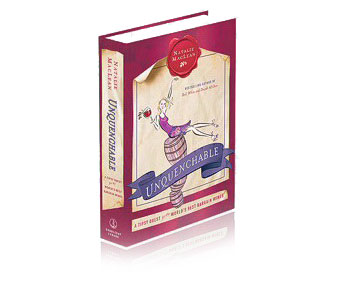
"Often the method used to make these sparkling wines is the same used to make Champagne," said Natalie MacLean, author of "Red, White and Drunk All Over: A Wine-Soaked Journey from Grape to Glass."
"You're getting a style unique to a particular region, but these bottles cost half to one-third the price of a non-vintage Champagne."
Some of these sparkling wines are so inexpensive that they shouldn't be reserved for celebrations or holidays, said MacLean, who also edits a wine newsletter found at www.nataliemaclean.com.
"The holidays are a good excuse to drink them, but they are among the most food-friendly wines," she said. "I love them with potato chips."
One way to try to determine the quality of an inexpensive sparkler is to read the label to see how it is made, she said. She suggested checking if it was produced through the méthode champenoise, the process used to make true Champagne in which the wine goes through a second fermentation inside its own bottle. In the United States, this sometimes is called the Champagne method; in Italy and Spain, this process is called the "classic" or "traditional" method.
For example, Cava, the sparkling wine made in Spain, is made through this method, which is why many wine store owners recommend it.
"The hottest (sparkling wine) category of them all is Cava," said George Randall, owner of Randall's Wines & Spirits in Fairview Heights and St. Louis.
Even at the upscale Wine Merchant, Cava is king, says owner John Nash. Specifically, NV Segura Viudas Cava Reserva Brut, at $8.99, outsells every other wine in the stores, in Clayton and Creve Coeur.
The store also sells a Segura Viudas split, holding about two small glasses of wine for $2.99. Nash said they can't keep it stock.
"It's incredibly well made. You can afford to pop open a bottle on a Wednesday night when you're watching television or at a special occasion," he said. "The driving factor of its popularity is the quality. We haven't found anything else like it in this price range."
The Segura Viudas is aged 2 1/2 years, longer than the requirement for vintage Champagnes, he said. "That's what keeps those fine, pinpoint bubbles." Better sparkling wines tend to have small bubbles. This Cava has such a following that Nash said that next year he plans to carry it in 1 1/2-liter magnums and in three- and six-liter bottles.
Don Pearline of Chesterfield is one of those who has become a Segura Viudas fan. He discovered the sparkler when his wife brought it home a few years ago.
"I like those tiny bubbles," he said. "It's a fun wine, and it tastes good."
Cava is also the choice of Linda Humes of Pacific, who buys Codorníu Reserva Raventós from Wines of Wildwood.
"I really love sparkling wine, but it doesn't have to be Champagne," she said. "One of my favorites is the Codorníu. It costs $18.95 but it tastes a lot more expensive. It's so clean with a nice mouth feel."
During the Christmas season, she likes to mix the Cava with a red juice. Last year she used pomegranate juice, and the year before, cranberry. As for Nussbaum, she likes to visit Straub's for Freixenet Cordon Negro, the popular Cava that comes in a distinct black and gold bottle. Freixenet S.A., a company held by the Ferrer family, also owns Segura Viudas and the Gloria Ferrer winery in Sonoma County, California.
Paul Hayden, wine buyer for the Wine and Cheese Place, said that while Cava is popular in the $10 and under category, his customers tend to go for California sparklers and French bubbly produced outside of Champagne if they are spending between $10 and $20. True Champagnes start at about $35 at the Wine and Cheese Place, with locations in Clayton, Ballwin and Rock Hill, and at sister store Provisions, in Creve Coeur.
Another trend is the growing demand for sparkling rosés, Hayden said. "They really took off last year, and prices have really been going up," he said.
One of the few California sparkling rosés under $20 is the Chandon Rosé produced by the Domaine Chandon winery in Napa, he said. The sparkler is doing well at Wine and Cheese, which sells it for $19.95. Domaine Chandon was established by the famous French Champagne house Moët & Chandon.
"People have really been discovering the brut rosés, myself included" said Karl Hagnauer, owner of Wines of Wildwood. "Sometimes the regular bruts are too sharp and dry. The rosé really takes the edge off. I've really fallen in love with them."
At Lukas Liquor Superstore in Ellisville, wine buyer Julia Whealon also has seen more interest in sparkling rosés, particularly as customers become more adventuresome.
"Sparkling rosés tend to be richer with a fuller mouth feel that's closer to red," she said.
But not everyone likes dry sparklers, and the sweet Italian bubbly Moscato d'Asti is a big seller this time of year. Although some dry wine drinkers turn their noses up at the sound of Moscato, Nash said that better quality Moscatos can be delicious, particularly paired with fresh fruit and a soft cheese like Gorgonzola.
He recommends the Saracco and Marenco labels. "Like with rosés, it has the connotation in some people's minds that sweet wines are inferior," Nash said. "But I serve Moscato to my wine snobby friends and they love them."
Reprinted with permission. Please ask permission before copying or using
this material. Comments? Suggestions? If you'd like to receive Natalie's free
e-wine newsletter, sign up at
www.nataliemaclean.com. It's free,
and your e-mail address will be kept confidential.


 Best Books of the Year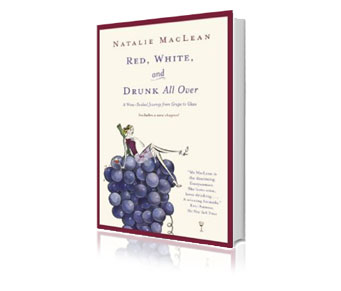


 Best Books of the Year